Physical Address
304 North Cardinal St.
Dorchester Center, MA 02124
Physical Address
304 North Cardinal St.
Dorchester Center, MA 02124

India’s solar expansion has transformed rooftops and landscapes nationwide, reducing coal use and emissions. But as panels age, a growing solar waste challenge is emerging, raising questions about how clean the transition truly is.
India’s solar boom is often told as a triumph. In just over a decade, the country has climbed to become the world’s third-largest solar power producer, transforming rooftops, farmlands, canals, and deserts into power-generating assets. Solar energy now accounts for more than a fifth of India’s installed capacity, cutting coal dependence and strengthening the country’s climate credentials.
But beneath this success lies an uncomfortable question: what happens when today’s solar panels reach the end of their life?
As India accelerates toward its renewable energy targets, the lack of a clear, large-scale plan for managing solar waste risks turning a clean energy victory into a long-term environmental challenge.
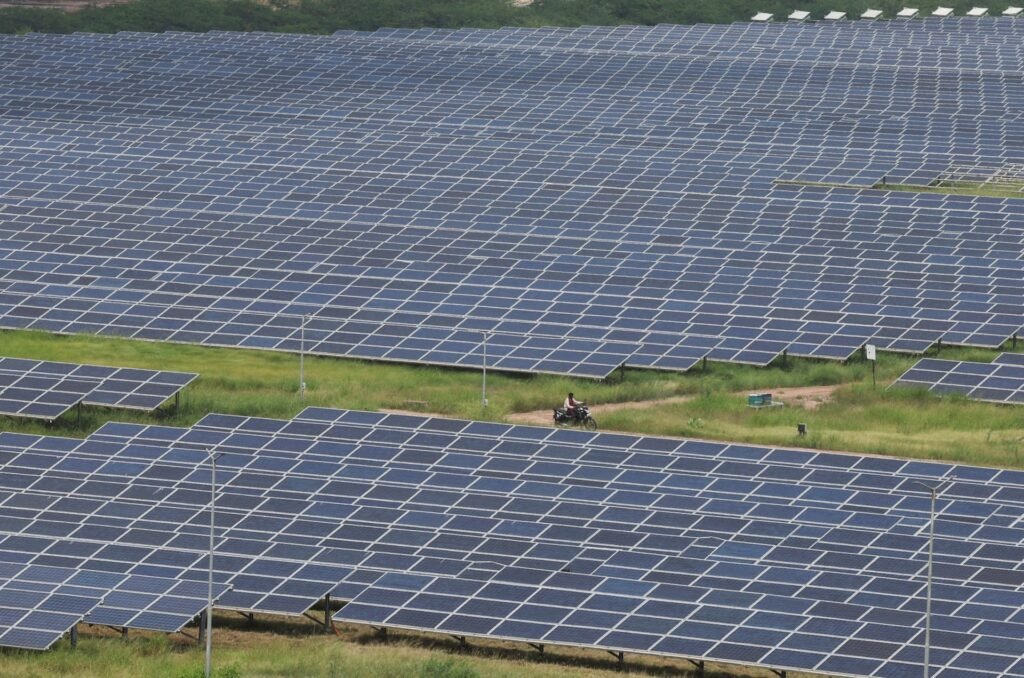
India’s solar deployment has moved at extraordinary speed. In little more than a decade, the country has scaled installed solar capacity from less than 5 GW in 2012 to over 80 GW today, making it the world’s third-largest solar power producer. Utility-scale solar parks now stretch across Rajasthan, Gujarat, and Karnataka, while rooftop systems have spread rapidly through cities, towns, and villages. Government data shows that nearly 2.4 million households have adopted rooftop solar under national subsidy schemes.
This India’s rapid expansion has delivered real benefits. Solar power has reduced coal consumption, improved energy access, and helped stabilise electricity costs during periods of high demand. Solar now contributes more than 20% of India’s total installed power capacity, playing a central role in the country’s climate and energy-security strategy.
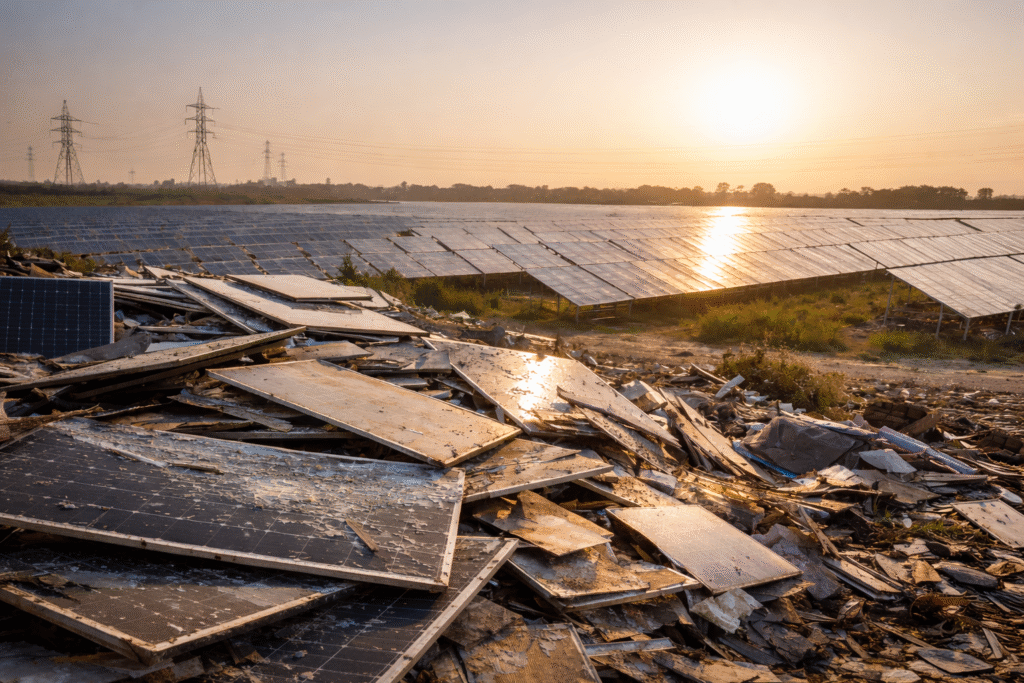
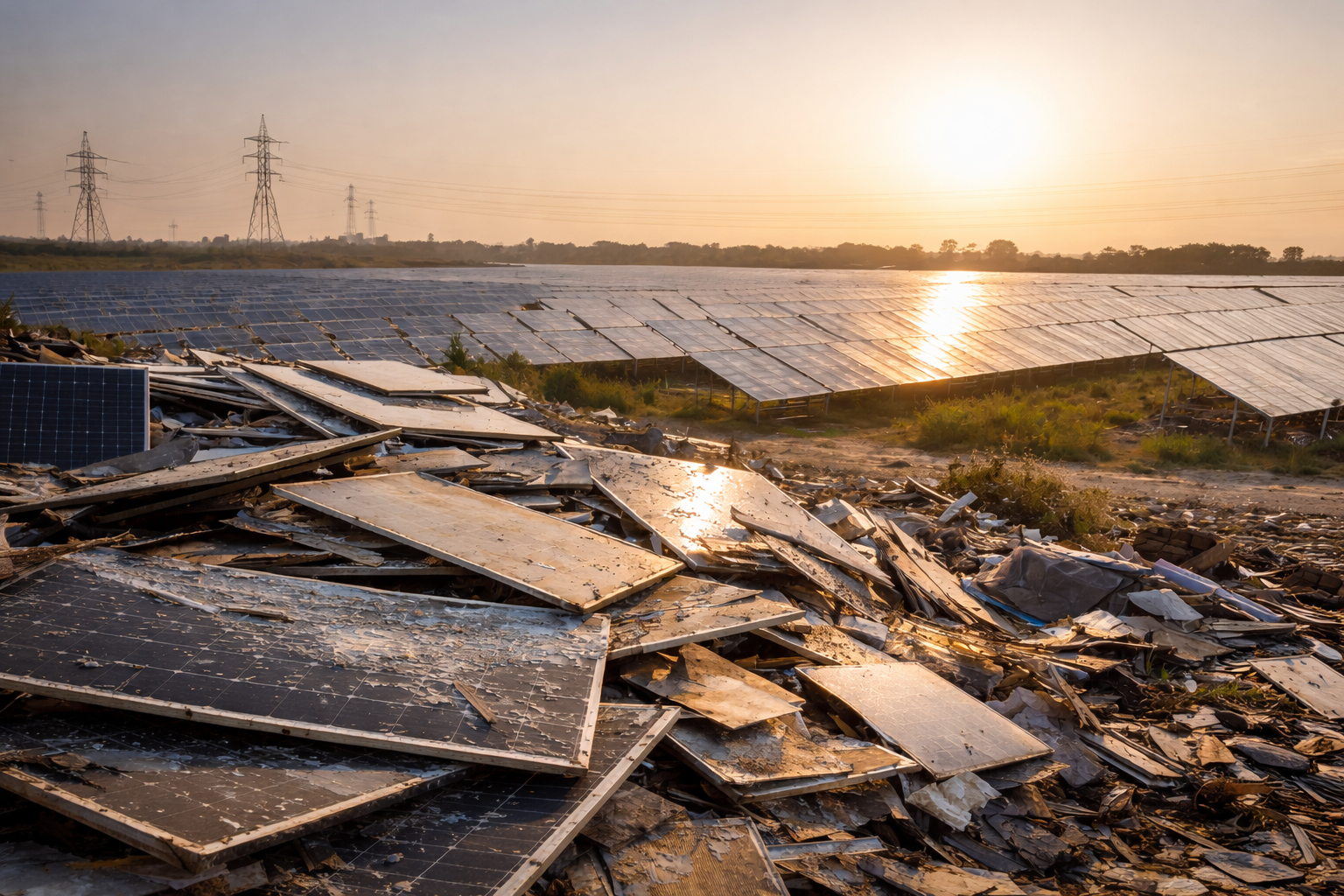
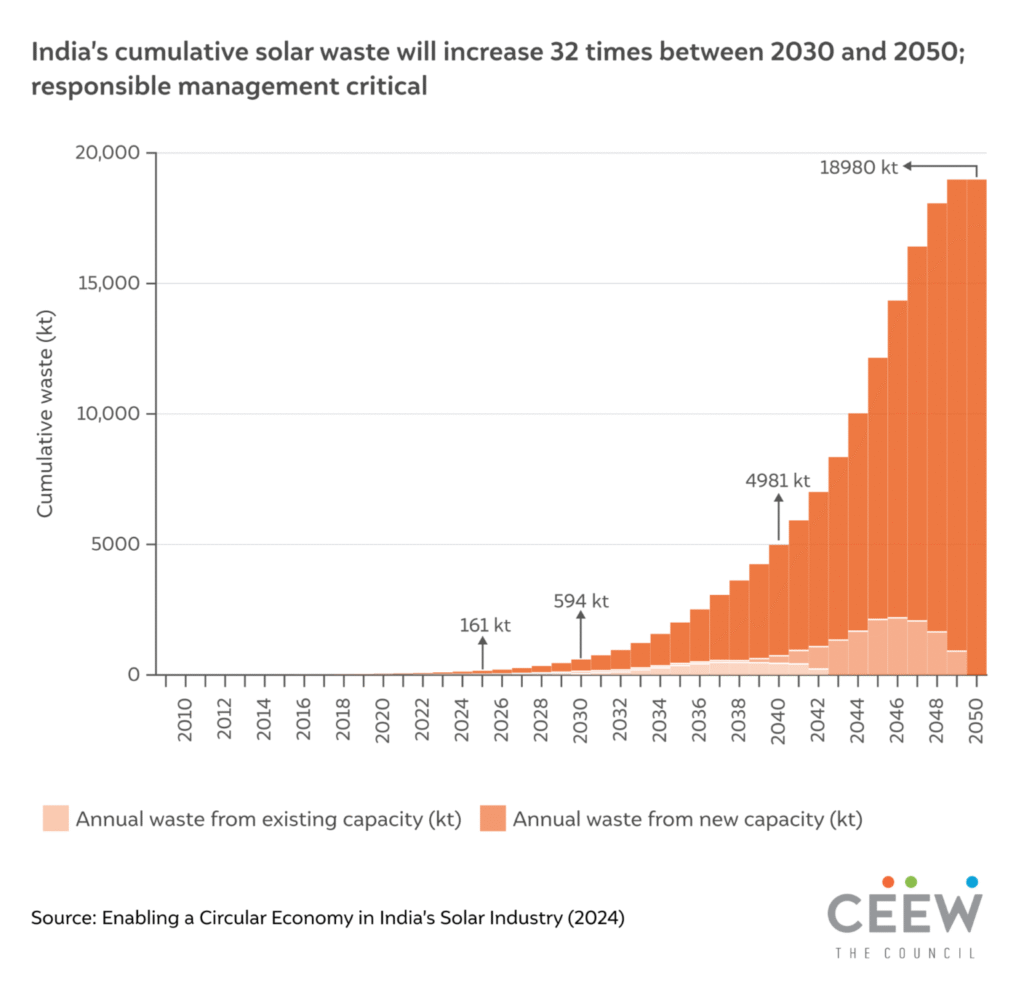
But solar panels are not eternal. Most photovoltaic modules are designed to operate for 25–30 years, and India’s earliest large-scale installations are now approaching that threshold. According to multiple studies, India could generate 600,000–1 million tonnes of solar waste by 2030, a figure expected to rise sharply to several million tonnes by 2040 as first-generation systems reach end-of-life.
Unlike fossil fuels, solar does not emit carbon during operation. However, once panels degrade or fail, they become a form of electronic waste. Without proper collection, recycling, and material recovery systems in place, this fast-growing waste stream risks becoming a hidden environmental cost of India’s clean-energy transition, one the country is not yet fully prepared to manage.
Modern solar panels are largely recyclable. They contain glass, aluminium frames, copper wiring, silicon cells, and small amounts of silver. These materials have clear economic value and can be reused in new panels or other industries.
Yet solar modules also contain trace amounts of hazardous substances, including lead and cadmium. If panels are dismantled improperly or dumped in landfills, these materials can leach into soil and groundwater, posing environmental and health risks.
Today, India’s most solar waste is processed using basic recycling methods. These techniques typically recover low-value materials like glass and aluminium, while high-value metals such as silver and silicon are lost or damaged. As a result, recycling remains economically unattractive, limiting private investment in advanced recovery technologies.
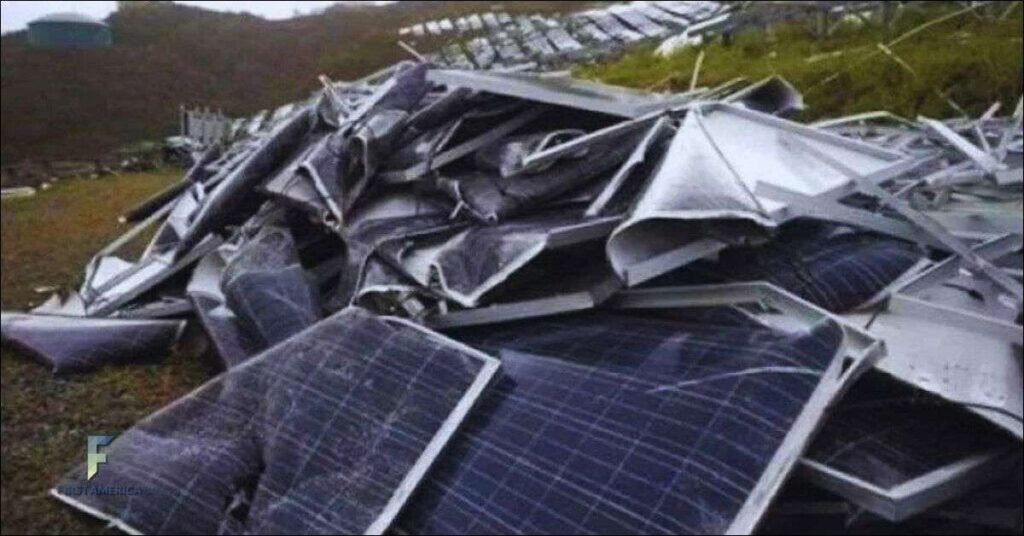
While solar panels are often described as recyclable, India’s current recycling ecosystem is not equipped to handle photovoltaic waste at scale. Most panels are made primarily of glass and aluminium, with smaller but valuable quantities of silicon, silver, copper, and polymers. In theory, more than 90% of a solar module by weight can be recovered.
In practice, however, most solar waste in India is processed using basic mechanical methods designed for general electronic scrap. These approaches typically recover only low-value materials such as glass and aluminium, while high-value components embedded in the solar cells are either lost, damaged, or extracted in negligible amounts. As a result, recycling remains economically unattractive, discouraging private investment in advanced recovery facilities.
Experts warn that this India’s gap will widen rapidly as larger volumes of panels reach end-of-life. Unlike consumer electronics, solar modules are bulky, heavy, and geographically dispersed, making collection and transport a significant logistical challenge. Rooftop systems, in particular, risk falling outside formal waste streams, especially once warranties expire and installers exit the picture.
Another challenge is the absence of clear regulatory responsibility. At present, India’s solar panels fall into a grey area between electronic waste and renewable infrastructure. While e-waste rules exist, they were not designed with large-scale photovoltaic systems in mind, leaving uncertainty over who is responsible for collection, recycling, and compliance.
Without policy clarity, recycling remains fragmented. Informal dismantling poses environmental risks, while valuable materials that could feed back into domestic manufacturing are lost. Analysts note that this undermines one of solar energy’s biggest long-term advantages: its potential to support a circular clean-energy economy.
The next decade will be decisive. As India pushes toward ambitious renewable targets, the absence of a regulated, self-sustaining solar recycling system could turn a manageable challenge into a structural weakness — one that erodes both environmental and economic gains from the solar transition.
One of the most contentious questions is responsibility. Should households manage rooftop panel disposal themselves? Should installers collect old modules? Or should manufacturers be accountable for products they profit from throughout their lifecycle?
Many experts support extended producer responsibility frameworks, where India’s companies involved in manufacturing and selling solar panels are required to manage recycling and disposal. Such models already exist in other electronics sectors and could help create a self-sustaining recycling market for solar.
Without clear accountability, the risk is fragmentation with panels slipping through regulatory gaps and environmental costs passed on to communities rather than energy producers.
India’s solar transition is undeniably real and impactful. But true sustainability extends beyond electricity generation. It includes how technologies are manufactured, maintained, and ultimately retired.
If India succeeds in building a robust solar recycling ecosystem, it could turn a looming challenge into an economic opportunity, recovering valuable materials, creating skilled jobs, and setting global standards for circular clean-energy systems.
If it fails, today’s climate solution could become tomorrow’s waste problem.
As one expert warned, “Without proper recycling, clean energy today could mean more waste tomorrow.”
India has shown it can deploy solar at scale. The next question is whether it can manage solar responsibly, not just at installation, but at end of life.