Physical Address
304 North Cardinal St.
Dorchester Center, MA 02124
Physical Address
304 North Cardinal St.
Dorchester Center, MA 02124
By 2050, we’ll need 70% more food, 50% more energy, and far more land than the planet can offer. Agrivoltaics may be the rare solution that delivers both, food and electricity, on the same piece of land. From increased crop yields to rural electrification, this dual-use technology is already transforming farms around the world. Here’s why agrivoltaics could become one of the most important tools for feeding and powering a 10-billion-person planet.
The year is 2050. Nearly 10 billion people live on Earth. They need food. They need electricity. And unfortunately, we are running out of land to provide both.
This may sound like a disaster movie. However, it is not fiction. It is our actual future, only 25 years away.
But before you panic, here’s the twist: a solution already exists. It can address both the global food crisis and the energy crisis at the same time. Even better, it is already working in real fields around the world.
We need to understand the scale of the challenge before we can understand the solution.
Food: According to the UN Food and Agriculture Organization, we will need 70% more food by 2050. Meanwhile, we lose 24 billion tons of fertile soil every year because of erosion and degradation. This makes food production harder each year.
Energy: The International Energy Agency (IEA) predicts that global energy demand will rise 50% by 2050. Meeting renewable energy targets alone would require installing solar panels over an area roughly the size of South Korea.
Land: Here’s the real barrier. We already use 40% of Earth’s ice-free land for agriculture. Cities are expanding into farmland. Climate change is pushing dry regions into deeper water stress.
So while demand for food and energy keeps increasing, the land needed to produce them is shrinking.
This is the core problem: we need more land for food and more land for energy, but we do not actually have more land to use.
What if one piece of land could produce food and energy at the same time?
This is the fundamental idea behind agrivoltaics.
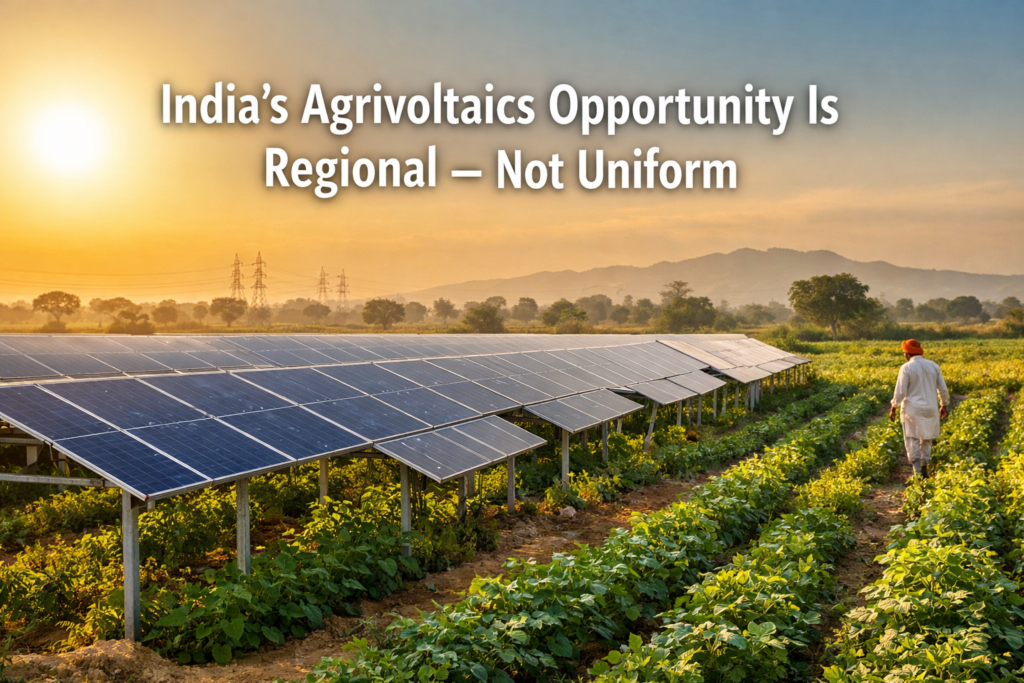
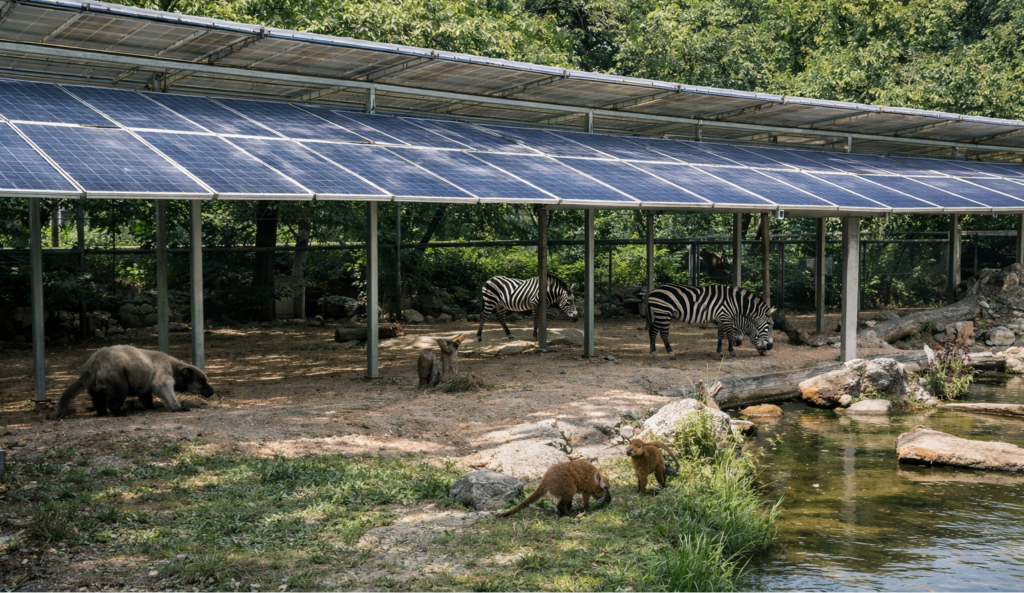
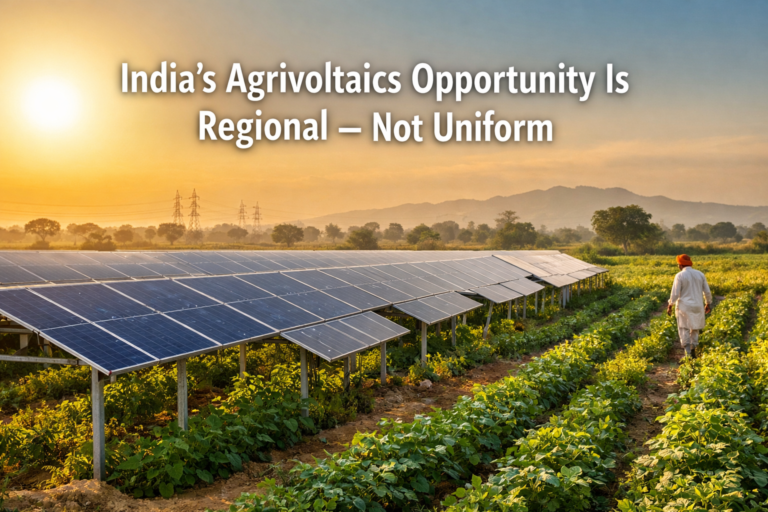
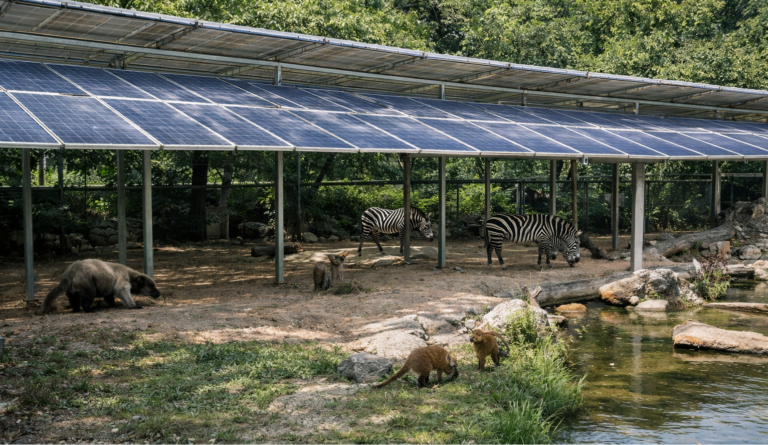
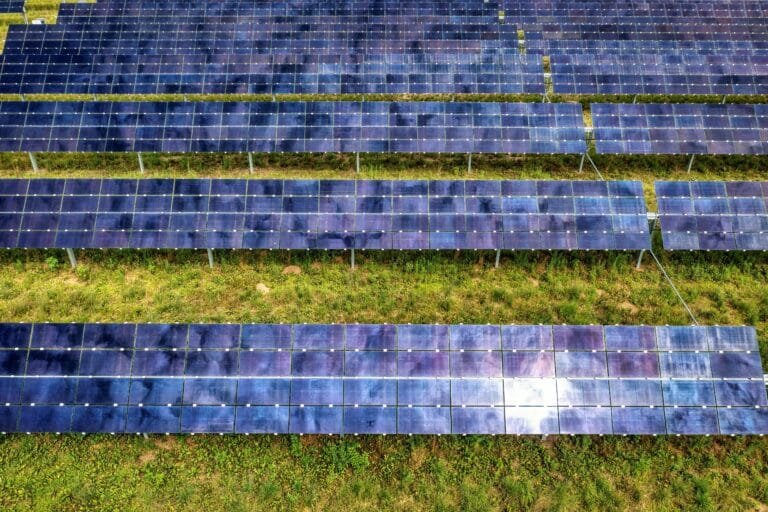
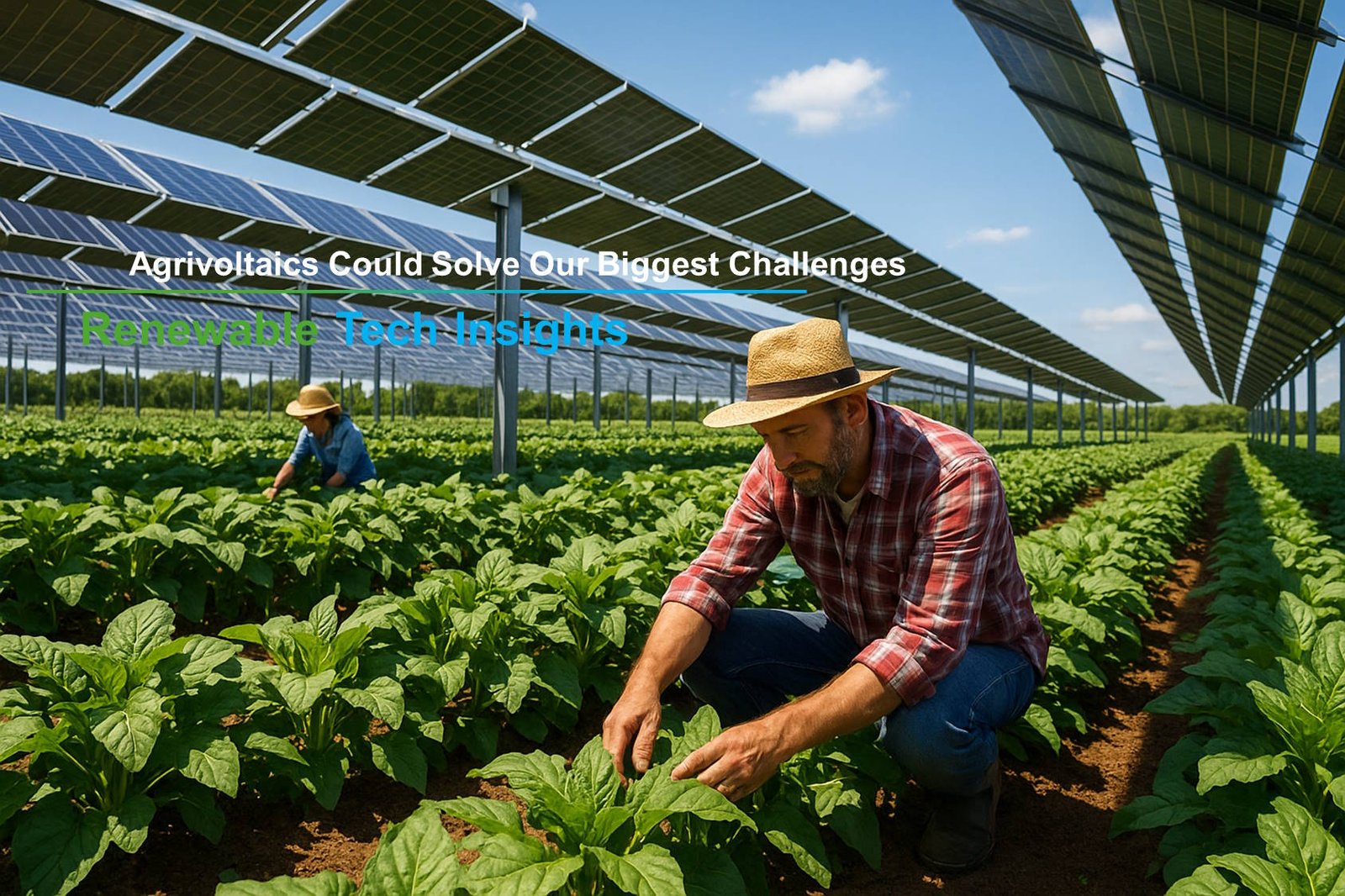
Agrivoltaic systems place solar panels 3 to 4 meters above crops, so farmers can continue planting, irrigating, and harvesting beneath them. At the same time, the panels generate clean electricity overhead.
The Fraunhofer Institute found that agrivoltaic can increase land-use efficiency by up to 70%. A single hectare can grow crops and power around 50 homes each year.
It is a rare example where two competing needs can be met with one solution.
Researchers once expected crops and solar panels to compete. However, the opposite turned out to be true. Crops and panels support one another.
Many crops grow better with partial shade, especially during extreme heat.
The University of Arizona has studied this for years. According to their findings, crops like lettuce, spinach, chilies, and even tomatoes often perform better under solar panels.
Dr. Greg Barron-Gafford explains it well:
“It’s like sitting under an umbrella at the beach. The plants get the light they need without the heat stress.”
Solar panels block direct sunlight. As a result, soil moisture evaporates more slowly.
Several studies show up to 40% water savings in dry regions. Some agrivoltaic designs even collect rainwater and direct it toward crops, which adds another layer of efficiency.
The shade provided by panels cools the air below them. Because solar panels lose efficiency in high heat, this cooler air actually helps them perform better.
Meanwhile, the panels protect crops from hail, frost, strong winds, and extreme sunlight. This creates a micro-climate that benefits both agriculture and solar generation.
In Kyushu, tea farmers are using vertical AgriPV systems. The filtered light improves tea quality, and farmers earn additional income from solar electricity.
One farmer explained that although weather still matters, solar income gives him more financial security throughout the year.
In rural Kenya, AgriPV projects supported by the University of Hohenheim are creating major changes.
Farmers growing beans and maize under panels report higher yields. Many villages also have electricity for the first time. This new energy powers irrigation pumps and small food-processing machines.
As a result, families can produce more food and store it for longer.
Italy has placed AgriPV at the center of its clean-energy strategy. Through its National Recovery and Resilience Plan, the government is funding over 2 GW of AgriPV capacity.
They see it as a key tool for meeting renewable-energy targets while protecting agricultural productivity in a warming climate.
Good ideas only scale if the economics work. Fortunately, agrivoltaic offers benefits for everyone involved.
For Farmers: Agrivoltaic creates two income streams: crops and electricity.
In India’s KUSUM scheme, smallholder farmers can earn up to USD 1,000 a year from solar electricity. That is a 20–30% increase in annual income for many families.
For Energy Developers: Agrivoltaic allows developers to access land that is often cheaper than industrial land.
Instead of buying land outright, companies can lease it from farmers, reducing costs and supporting rural communities.
For Governments: Agrivoltaic helps meet food-security goals, clean-energy targets, rural-development needs, and climate-adaptation challenges, all at once. Few solutions address so many issues simultaneously.
Although agrivoltaic is promising, it still faces real hurdles.
Higher Costs: Agrivoltaic systems cost 20–30% more than standard ground-mounted solar farms. Elevated structures and specialized mounting systems add to the bill. However, costs are falling as designs improve.
Complexity: Agrivoltaic requires understanding both farming and solar engineering. Farmers need training, and the systems require regular maintenance.
Crop Choice Limitations: Some crops work very well under panels, but not all. Tall crops, full-sun crops, and heavily mechanized farms require customized designs.
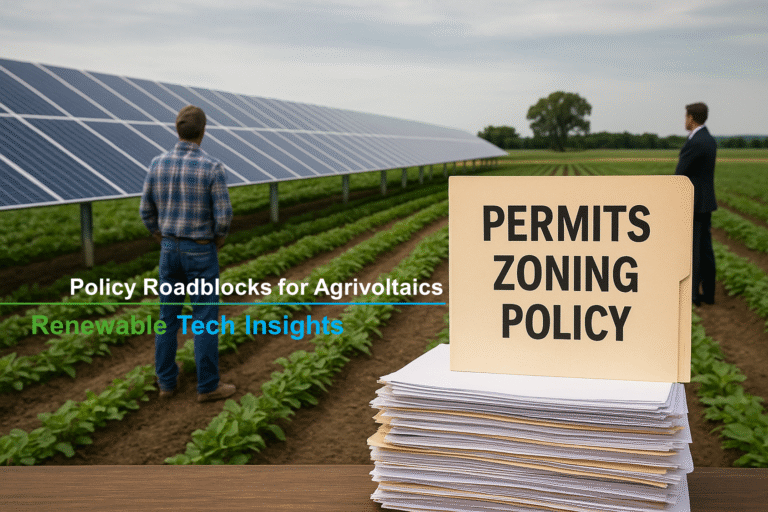
Policy Barriers: Policies can help unlock agrivoltaic , but inconsistent rules and complex permitting processes often slow deployment.
If agrivoltaic grows at the pace researchers expect, the future could look very different.
Rural communities could generate and sell their own clean energy.
Farms might become more resilient to heatwaves, droughts, and extreme weather.
Agricultural regions could produce food and electricity on the same land instead of competing for space.
And in many developing countries, agrivoltaic could allow communities to leapfrog traditional grid infrastructure, just as they leapfrogged landline phones with mobile technology.
According to the World Bank’s Global Electrification Database, agrivoltaic could bring electricity to up to 600 million rural people by 2030. At the same time, it could strengthen food production in those regions.
This is more than technology. It is transformation.
Whether you are a student planning your career, a farmer exploring new options, an investor seeking impact, or simply someone who cares about our planet, this matters to you.
The technology exists. The economics are improving. The need is clear.
Agrivoltaic shows that feeding people and powering communities do not need to compete. They can support each other.
And as we move toward 2050, the world will need solutions that deliver more than one benefit at the same time.