Physical Address
304 North Cardinal St.
Dorchester Center, MA 02124
Physical Address
304 North Cardinal St.
Dorchester Center, MA 02124

Solar, wind, and battery prices have fallen by more than 99% in four decades, reshaping the global energy system. This is how learning curves made clean energy the cheapest power in history and why costs will keep falling faster than anyone expected.
Clean energy didn’t suddenly become cheap.
It learned how to be.
Over the past four decades, the cost of generating electricity from the sun, wind, and batteries has fallen so dramatically that fossil fuels, once considered irreplaceable, now struggle to compete on price. What began as niche, expensive technologies subsidized by governments has quietly become the economic backbone of the global energy system.
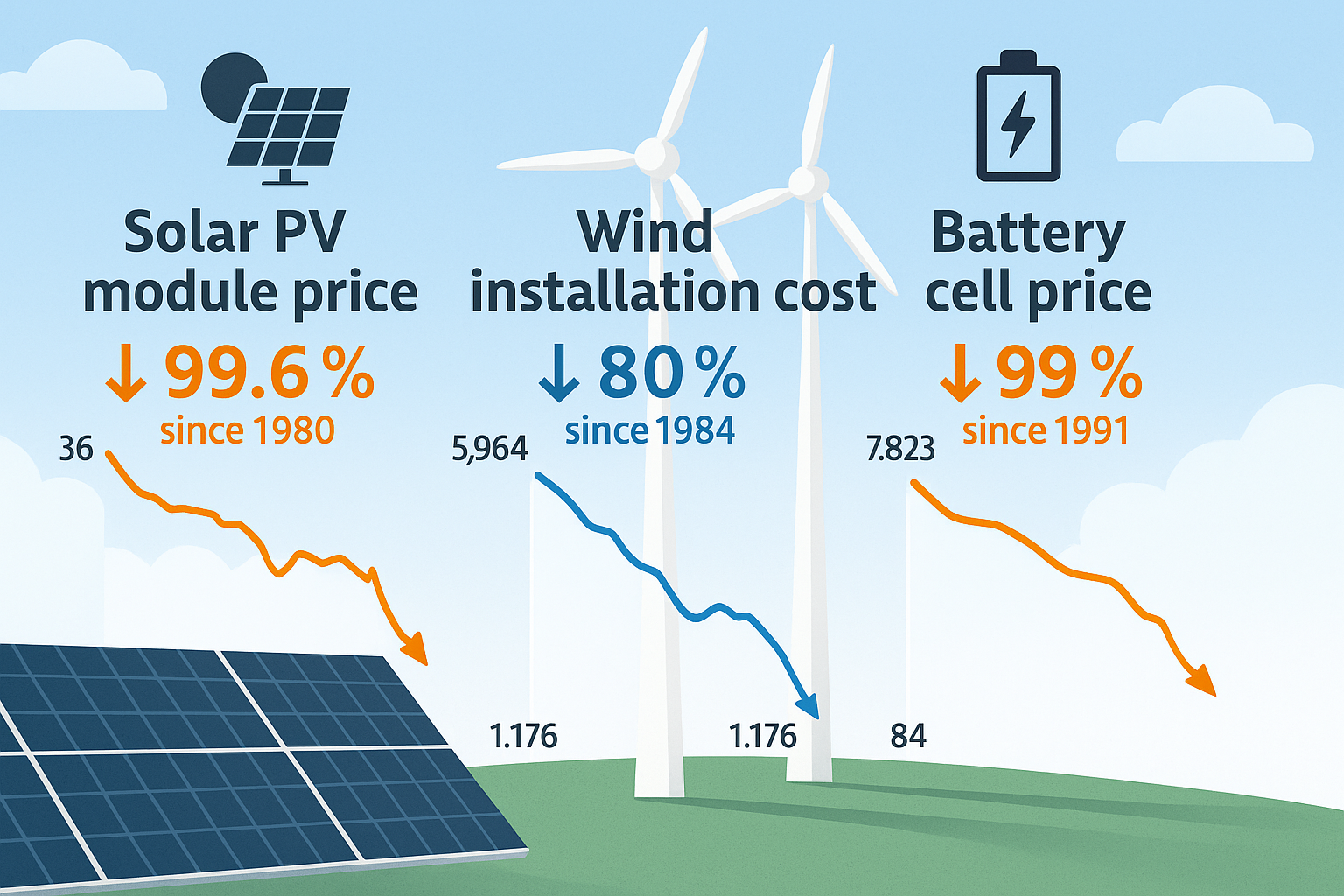
The numbers tell the story. Since 1980, the cost of solar photovoltaic (PV) modules has dropped by 99.6%. Wind installation costs have fallen by 80%, and batterries are now 99% cheaper than they were in 1991. These aren’t minor improvements. They are exponential declines that have rewritten the economics of power generation.
Behind this transformation lies a simple but powerful concept: the learning curve.
In most manufacturing industries, each time cumulative production doubles, costs fall by a predictable percentage, a phenomenon known as the learning curve (or experience curve). The more you build, the better you get at building.
Clean energy technologies fit this model perfectly.
As engineers refine solar cell designs, supply chains scale, and factories automate, every generation of panels, turbines, and batteries becomes cheaper, more reliable, and more efficient.
Solar PV is the clearest example. Early modules in the 1980s cost around $36 per watt. Today, that same watt of power costs less than 10 cents, a 99% price collapse. The same story is unfolding in wind and batteries. Each turbine installed, each gigawatt-hour of storage produced, feeds the next round of cost reductions.
Coal, gas, and nuclear plants operate in an entirely different economic world.
They depend on raw materials, heavy construction, and long project timelines, factors that limit how much they can improve with repetition. A gas plant doesn’t get cheaper the more we build it; the cost of fuel, steel, and cement doesn’t obey the learning curve.
Clean energy, by contrast, is built like technology, not infrastructure.
It benefits from iteration, modularity, and design feedback. Each panel, inverter, or battery cell can be refined, mass-produced, and shipped faster than any fossil fuel power plant could be constructed.
That’s why renewables keep getting cheaper, and why fossil fuels have hit a plateau.
What makes this transition remarkable isn’t just how much costs have fallen, but how the process feeds itself.
Cheaper solar panels drive more installations. More installations lead to greater manufacturing scale. Scale unlocks new efficiencies in supply chains and materials. And those efficiencies make panels cheaper still.
It’s a self-reinforcing loop, a virtuous cycle where innovation, deployment, and cost decline move in sync.
And the faster the world installs clean technologies, the faster prices fall again.
Wind power followed the same trajectory. From bulky steel structures with limited lifespans, modern turbines have evolved into lightweight, high-capacity machines capable of delivering reliable power at a fraction of the original cost. Battery technology, once the bottleneck for renewables, is now following an even steeper decline as gigafactories scale and chemistry improves.
For decades, clean energy was dismissed as too intermittent, too expensive, or too idealistic. Yet today, it’s the cheapest source of electricity in history, a title once unthinkable.
This cost revolution is opening new possibilities that reach far beyond the grid.
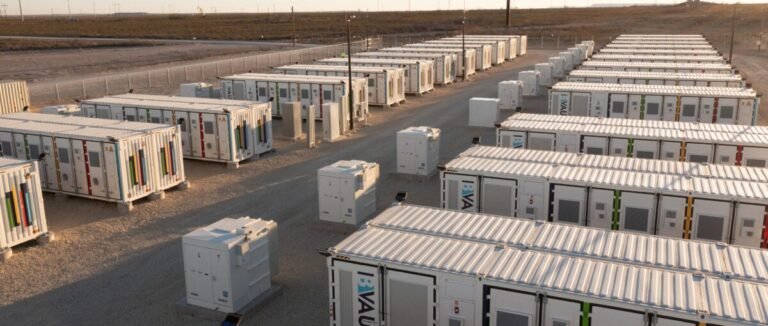
Affordable batteries are enabling “baseload” power from solar + storage systems. Electrified transport and heating are scaling faster than policy forecasts predicted. Even sectors once deemed “hard to decarbonize”, mining, steel, shipping, are beginning to electrify because the economics finally make sense.
Every solar panel, turbine, and battery built today sets the stage for another round of cost reductions tomorrow. This is how transitions happen, not through sudden leaps, but through relentless improvement.
If the past forty years were about making clean energy competitive, the next forty will be about integration, linking generation, storage, and digital intelligence into one synchronized system.
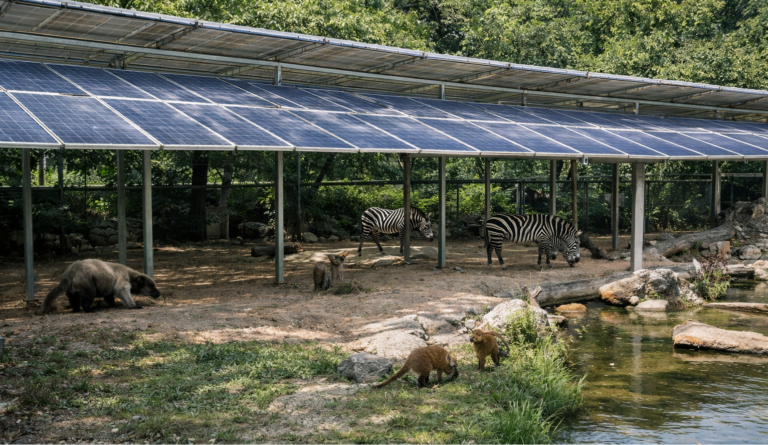
Artificial intelligence and smart grids are now learning how to balance renewables in real time. Floating and vertical solar systems, like Germany’s new 1.87 MW vertical floating PV plant, are proving that design innovation can coexist with ecological harmony.
Meanwhile, battery costs continue to drop, making solar-powered microgrids and electric mobility viable even in remote regions.
The learning curve hasn’t flattened. It’s steepening.
The clean energy revolution didn’t happen overnight.
It happened because millions of engineers, scientists, and entrepreneurs learned from every installation, every factory line, and every mistake, and made it better.
Coal and gas can’t replicate that.
But solar can. Wind can. Batteries can.
That’s how transitions happen.
Quietly. Incrementally. Exponentially.


Leave a Reply