Physical Address
304 North Cardinal St.
Dorchester Center, MA 02124
Physical Address
304 North Cardinal St.
Dorchester Center, MA 02124

Agrivoltaics is evolving beyond proof-of-concept toward scalable, climate-smart farming solutions. As Australia and the world invest in integrated food-energy systems, new innovations from luminescent solar materials to precision irrigation promise to redefine how we cultivate land, conserve water, and generate power together.
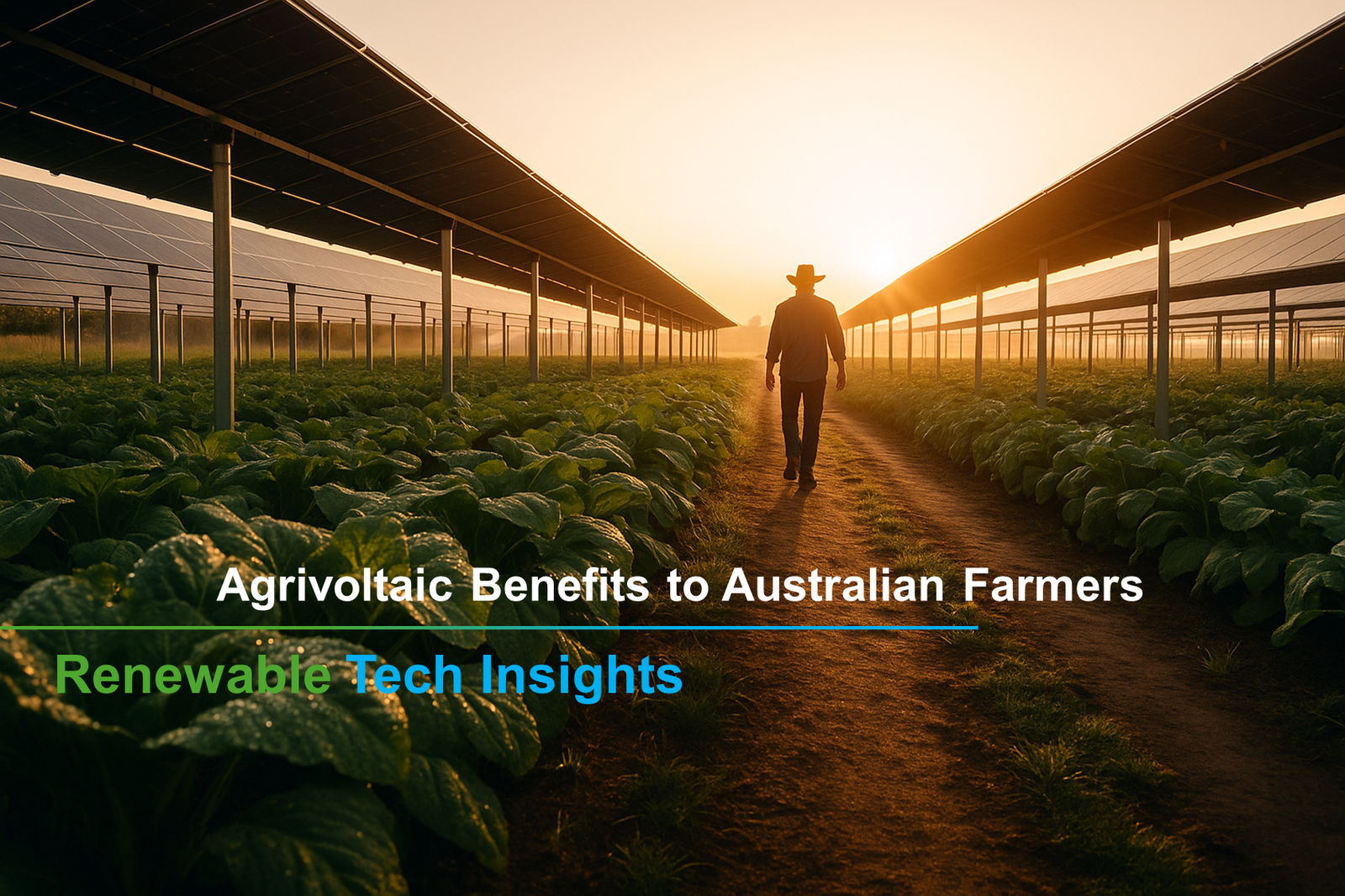
Across Australia, farmers are facing an uncomfortable truth: rising heat, erratic rainfall, and the pressure to keep their land productive while energy prices climb. Yet, a quiet revolution is taking place on test plots and research farms from New South Wales to Western Australia. It’s called agrivoltaic (or also known as agriphotovoltaics, agriPV, agrisolar and agricultural-solar), the co-location of solar panels and agriculture, and it’s reshaping how we think about food and energy production on the same piece of land.
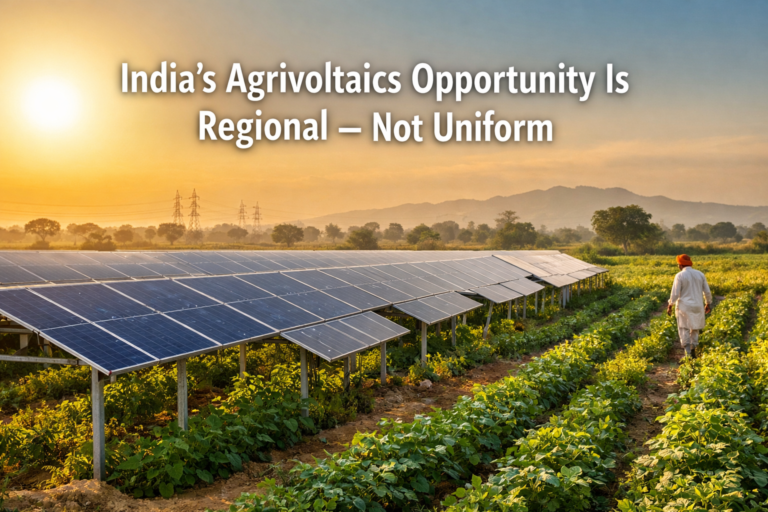
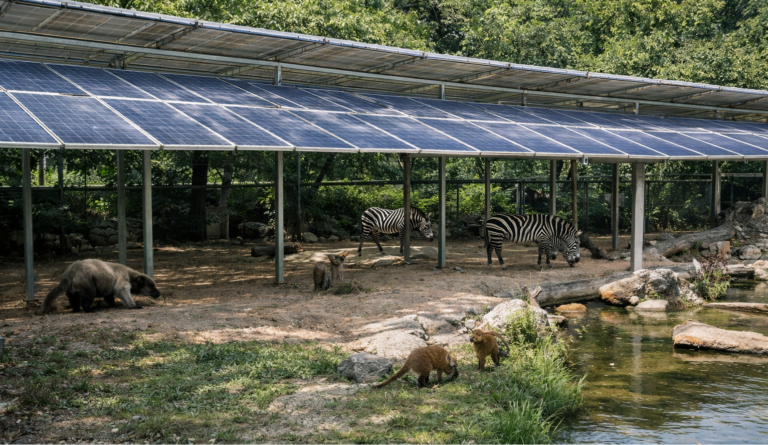
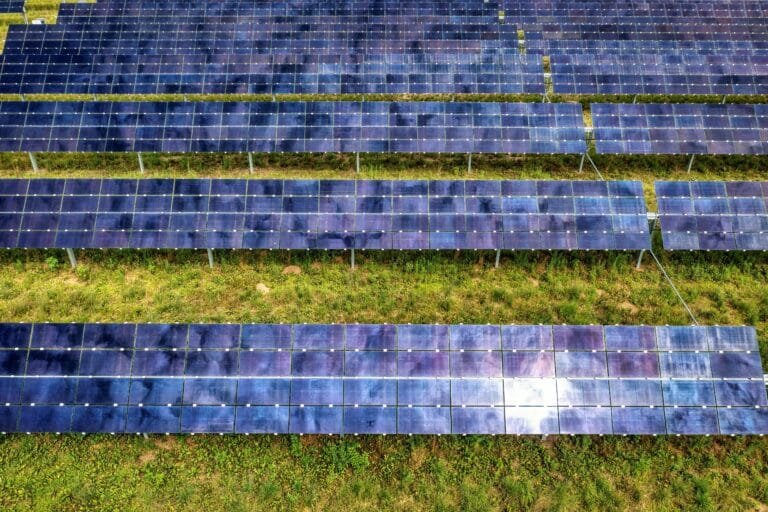
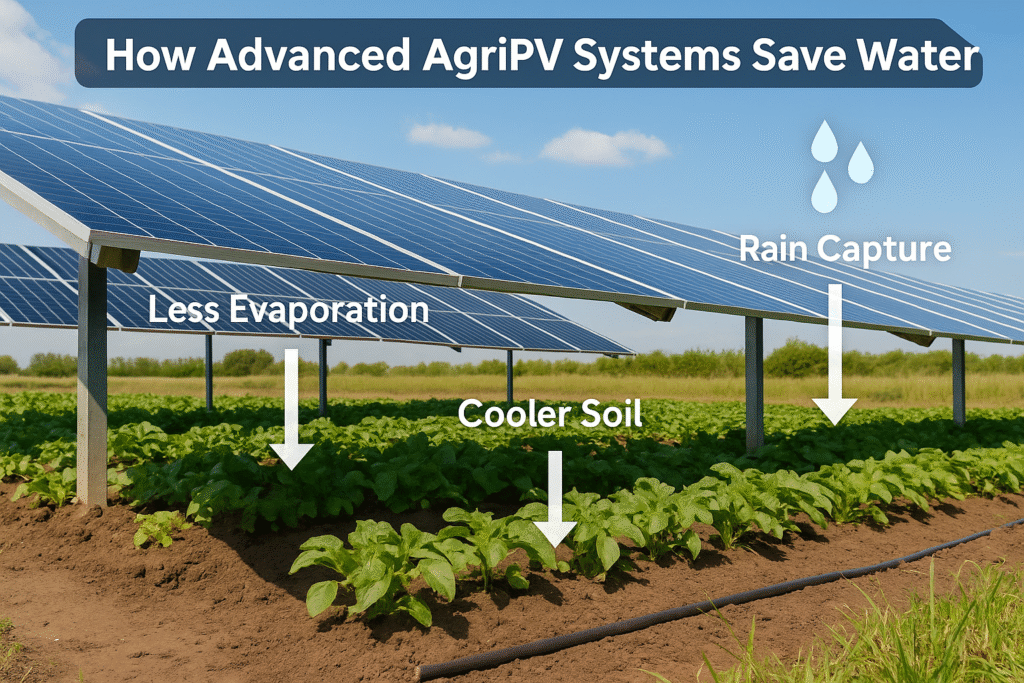
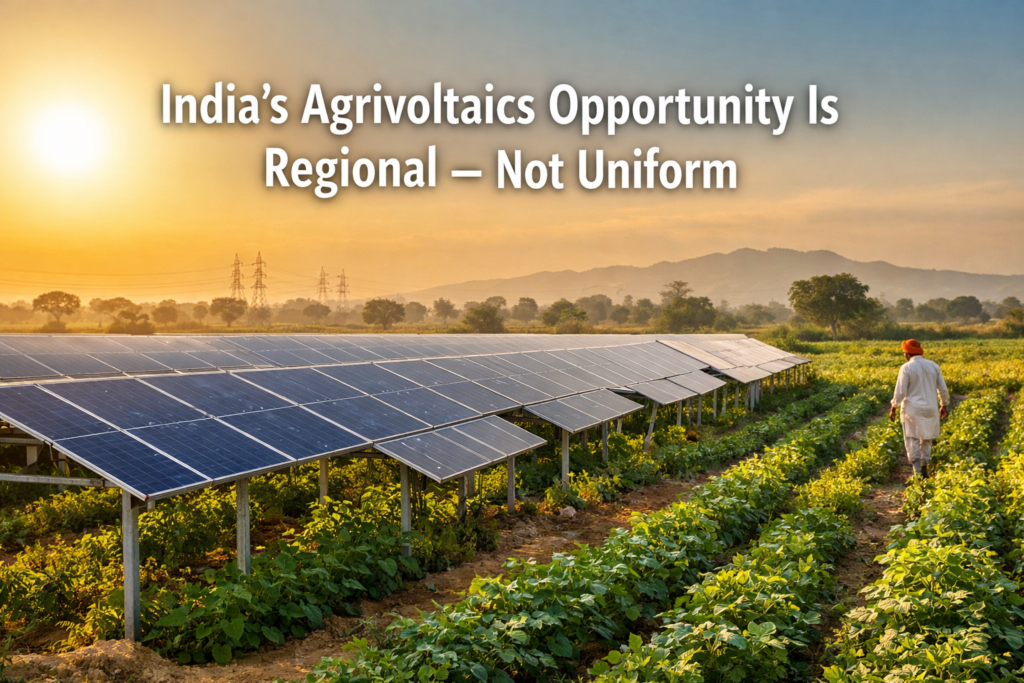
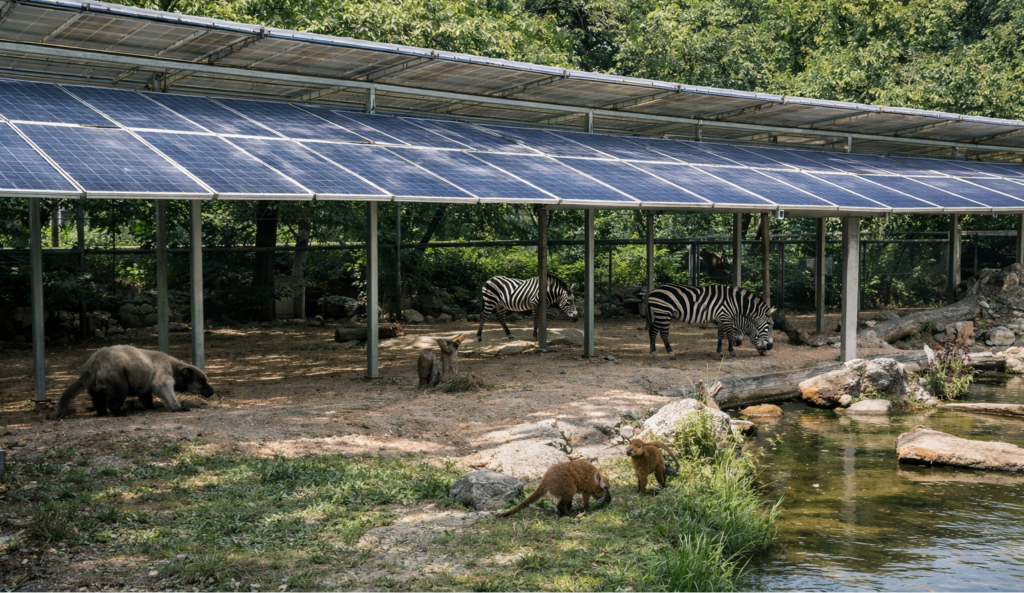
In simple terms, agrivoltaic means building solar installations high enough or spaced wide enough so crops, livestock, or horticulture can thrive underneath. Solar panels generate electricity while their shade protects soil moisture, cools crops, and reduces evaporation. Instead of competing for space, food and energy start working together.
Australia’s semi-arid climate makes it an ideal testing ground. In regions where temperatures regularly exceed 35 °C, shading from solar panels can lower leaf temperature by several degrees and cut water loss by up to 30 percent. At the same time, the reflected light and albedo from soil or grass below help boost panel efficiency. It’s a self-reinforcing system: cooler panels perform better, and protected crops grow more evenly.
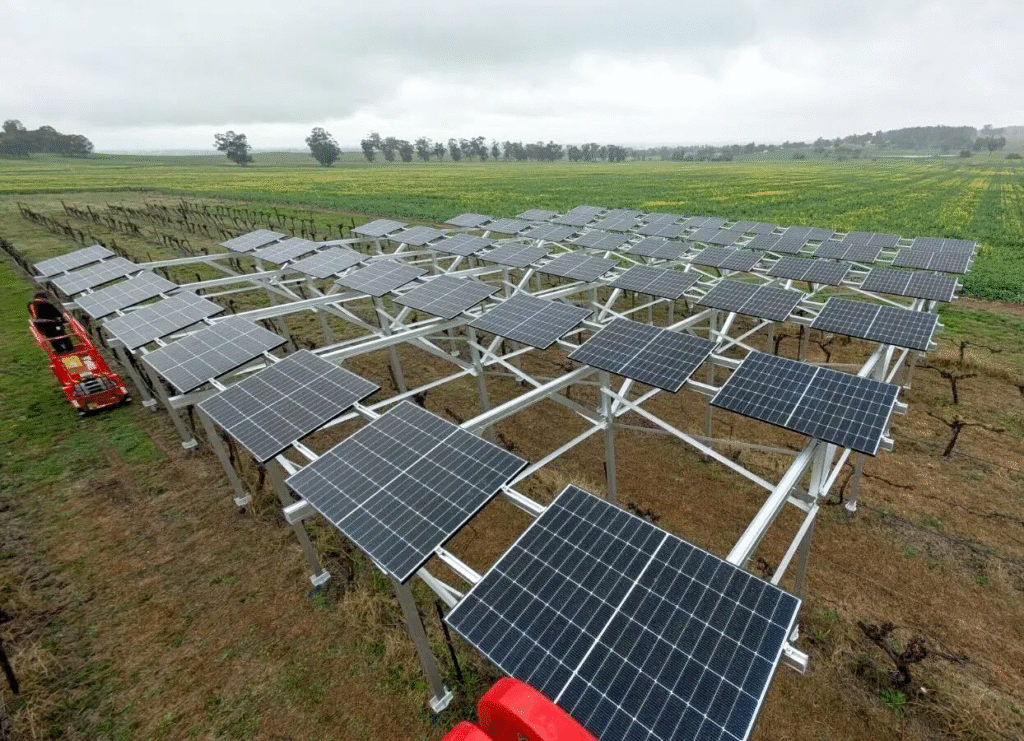
For farmers, the numbers are compelling. Land used for agrivoltaics can earn dual revenue, crop or grazing income plus electricity generation. In some pilot programs, hosting solar panels has added A$1,000–A$2,000 per hectare per year in clean-energy payments, often with minimal disruption to normal operations. Over time, those earnings can fund irrigation upgrades or precision-farming technology, improving resilience even further.
Water scarcity remains one of the biggest challenges for Australian agriculture. Agrivoltaic systems help by reducing evapotranspiration, retaining soil moisture, and maintaining cooler microclimates. In tomato and capsicum trials in Western Australia, irrigation frequency dropped by nearly 20 percent under partial shading. For crops grown in sandy or shallow soils, this saving translates directly to lower pumping energy and higher drought tolerance.
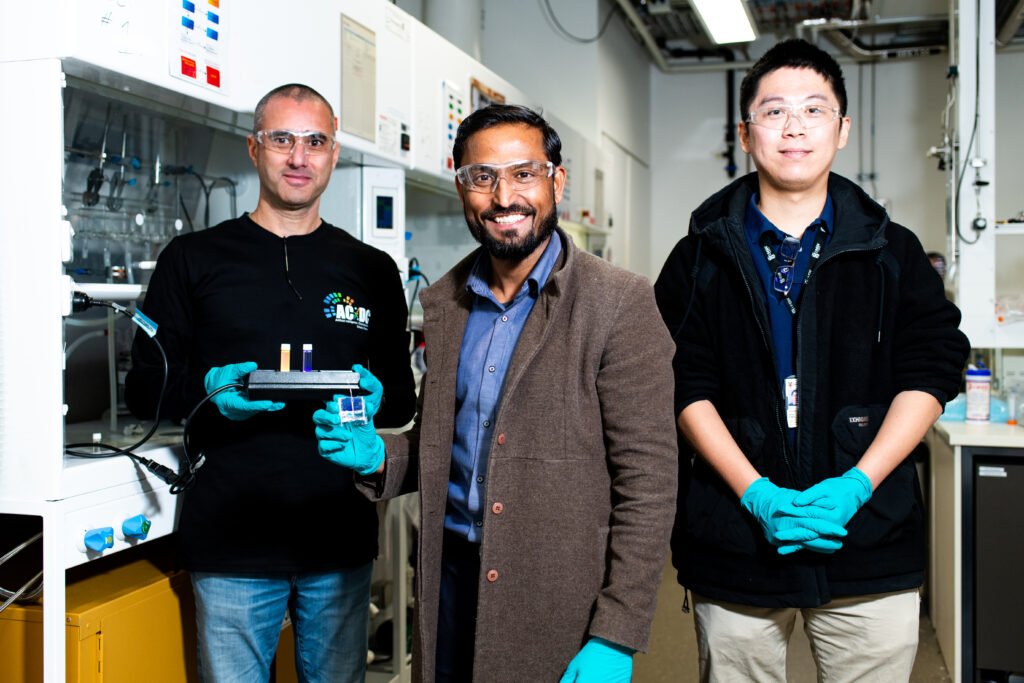
A new collaboration between Tindo Solar and researchers at UNSW, led by Professor Ziv Hameiri and Dr Mahesh Suryawanshi, is developing next-generation luminescent films for agrivoltaic systems. Supported through a major R&D grant from the TRaCE Program, the project combines UNSW’s expertise in solar-materials research with Tindo’s local module-manufacturing capability. These advanced light-managing materials are engineered to transmit the wavelengths crops need for photosynthesis while redirecting the rest of the spectrum toward electricity generation. By tailoring sunlight for both plants and power, the UNSW–Tindo team aims to create AgriPV modules that improve farm productivity, energy yield, and water efficiency, helping Australian agriculture and renewable energy grow together on the same land.
Australia is beginning to see agrivoltaics move from concept to commercial reality. Several large-scale projects are demonstrating how renewable energy can coexist with farming:
Together, these projects highlight how Australia’s clean-energy sector and agricultural industries are beginning to collaborate, testing practical pathways for dual-use solar farms that protect crops, sustain rural economies, and increase energy resilience.
Agrivoltaics is still new in Australia. The main hurdles are capital cost, mechanical design, and regulatory clarity. Farmers need systems that are easy to move, service, and finance. Developers need clearer guidelines on agricultural classification and grid connection for dual-use sites. Policy support is improving, with ARENA, the NSW Decarbonisation Innovation Hub, and university partnerships funding pilot installations. Over time, standardised mounting structures and region-specific crop data will bring down costs and uncertainty.
By 2026, agrivoltaics could shift from demonstration to deployment. The opportunity is especially strong for high-value crops, dairy and livestock operations, and regional energy communities looking to stabilise local supply. As designs evolve, bifacial panels, spectral films, AI-based light control, the focus will move from feasibility to profitability. Australia’s farms already supply the world with clean food. Now, they can also supply clean power.
What crops perform best under agrivoltaics?
Leafy greens, herbs, berries, and shade-tolerant vegetables have shown the highest yield stability. Grazing systems using pasture mixes also perform well under elevated modules.
Can agrivoltaics work in dry or semi-arid regions?
Yes. Trials show significant water savings and reduced heat stress even in low-rainfall areas, making it suitable for much of inland Australia.
What panel height is optimal for grazing animals?
Mounting heights of 2.5–3 m allow easy animal movement and maintenance access, while still providing adequate shading and cooling benefits.
Are there incentives for Australian farmers?
Some state and federal programs, such as ARENA’s Regional Microgrid initiatives, support on-farm renewables. Emerging carbon-credit schemes may soon reward dual-use solar installations that maintain vegetation cover.


Join thousands of readers exploring the next wave of clean energy innovation.