Physical Address
Sydney, Australia 2564
Physical Address
Sydney, Australia 2564
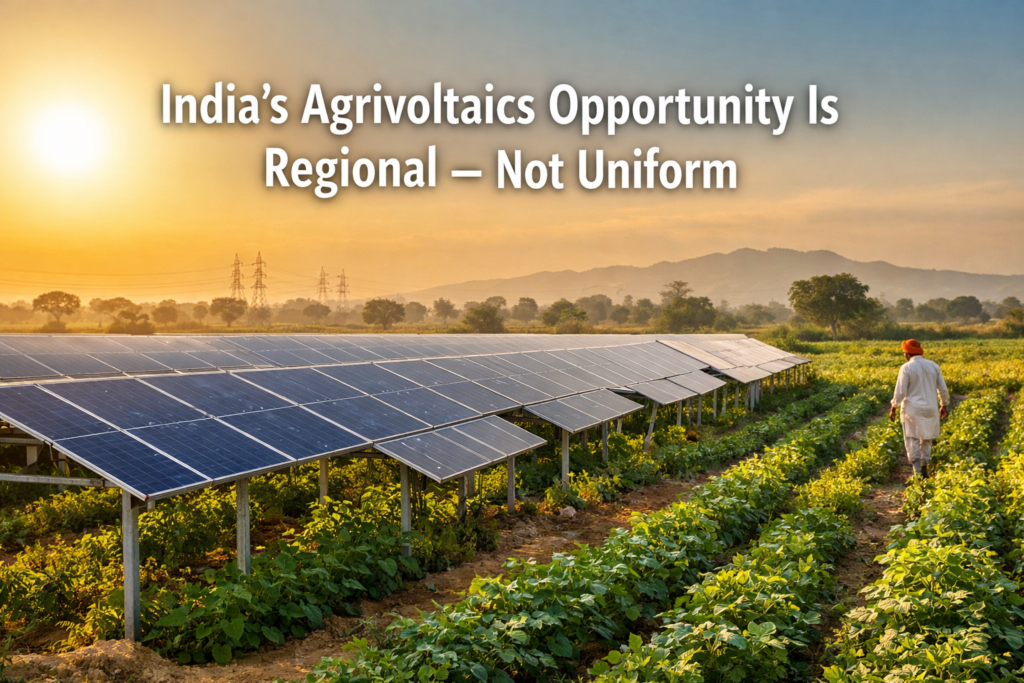
A national-scale analysis reveals that agrivoltaics in India will not scale everywhere equally. Strong potential exists in specific regions, but policy and planning must evolve to match geography.

Today, agrivoltaics is often described as a promising solution for India. Solar panels above crops. Extra income for farmers. Better land use. On paper, it appears to fit perfectly with India’s growing energy demand, water stress, and pressure on agricultural land.
However, one key question has remained unanswered for far too long:
Where does agrivoltaics actually make sense at a national scale?
A recently published study in Energy for Sustainable Development finally addresses this gap. Instead of focusing on individual pilot projects, the researchers conducted a national-scale suitability analysis for agrivoltaics across India. Their findings send a clear message. India’s agrivoltaic future will not be uniform. It will be regional, targeted, and shaped by local conditions.
More importantly, the study shows that India’s biggest barriers to agrivoltaics are no longer technical. They are institutional.
Most agrivoltaics research focuses on crop trials or small experimental sites. In contrast, this study took a broader and more practical view.
First, the authors developed a GIS-based framework combining three critical dimensions:
Next, they integrated these layers into a single Agrivoltaic Suitability and Potential Index (ASPI). This allowed Indian states to be compared based on readiness, not just sunlight.
As a result, agrivoltaics is no longer framed only as a solar technology. Instead, it is evaluated as a system that must work within farming and water realities.
Crucially, the national analysis reveals a clear spatial pattern. India’s agrivoltaic opportunity forms a geographic corridor, not a nationwide blanket.
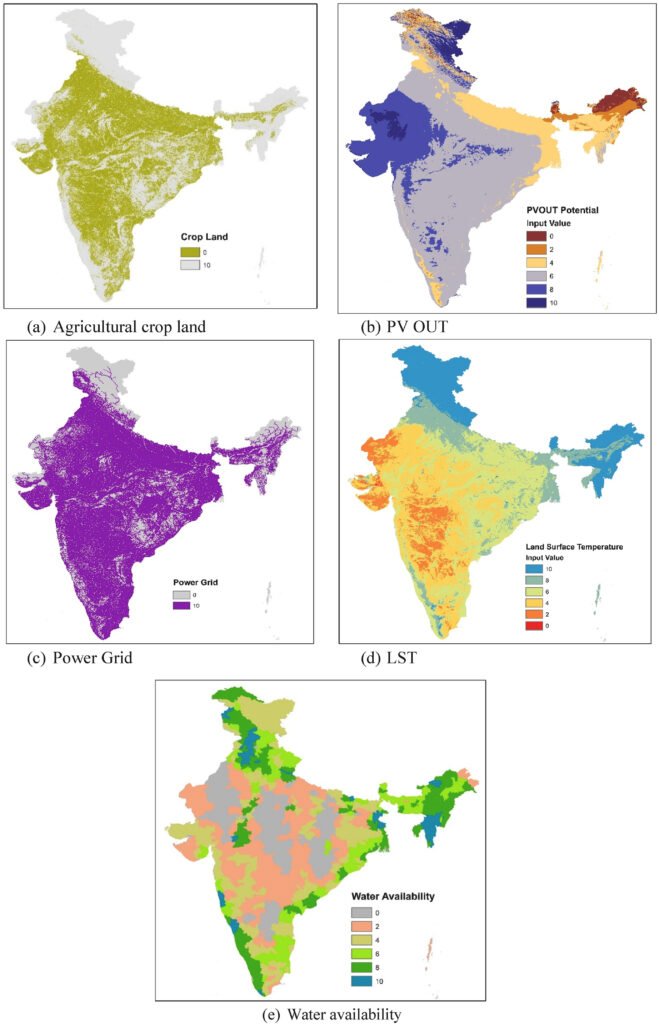
States such as Rajasthan, Gujarat, Punjab, Haryana, Madhya Pradesh, and Maharashtra emerge as the strongest candidates. These regions combine high solar resource, intensive agriculture, and significant water stress.
In these areas, the shade and microclimate benefits of agrivoltaics are not optional extras. Instead, they directly address real and growing constraints faced by farmers.
Meanwhile, states including Uttar Pradesh, Tamil Nadu, Karnataka, Andhra Pradesh, and Telangana also show meaningful potential. However, suitability varies within these states. Agrivoltaics here is likely to work best in selected districts and cropping systems.
By contrast, Himalayan and north-eastern states score lower overall. Terrain, climate, and grid access create additional challenges. That does not make agrivoltaics impossible. Rather, it means deployment would require very different system designs and expectations.
Taken together, the message is simple: India does not have one agrivoltaic solution. It has many.
Importantly, the study treats water sustainability as a core driver, not a secondary benefit.
In many discussions, water savings under agrivoltaics are mentioned only briefly. Here, water stress plays a central role in determining priority regions. This shift matters.
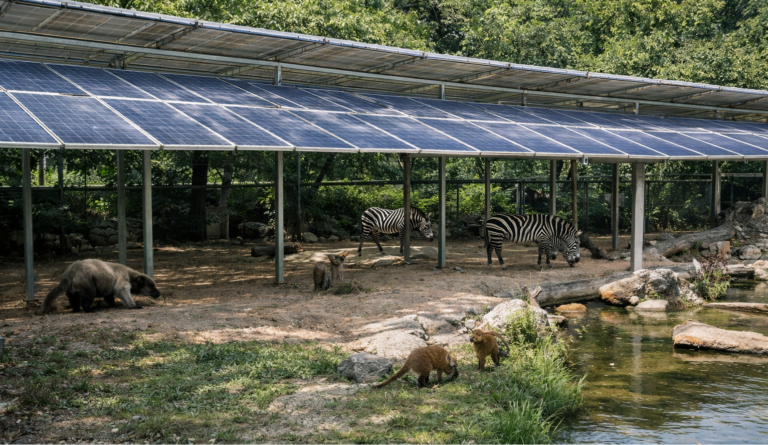
In arid and semi-arid regions, agrivoltaics can reduce evapotranspiration, moderate soil temperatures, and stabilise yields during heat waves. Therefore, agrivoltaics should be viewed as climate adaptation infrastructure, not just renewable energy deployment.
This framing has serious implications for how projects are planned, funded, and evaluated.

At the same time, the study highlights constraints that optimistic narratives often overlook.
Grid proximity remains critical. Even regions with strong agricultural suitability score lower when evacuation infrastructure is weak. In practice, agronomic benefits alone do not guarantee deployment.
Equally important is the finding that India still has very limited on-ground agrivoltaic deployment. Despite strong national potential, operational projects remain few and concentrated in only a handful of states.
This gap leads to a clear conclusion. The bottleneck is no longer geography. It is governance.
Although the study does not explicitly critique policy, its implications are difficult to ignore.
India’s major solar programmes, including PM-KUSUM, remain largely technology-agnostic. They do not distinguish between ground-mounted solar, pump solarisation, and agrivoltaic systems in a spatially targeted way.
Yet the national-scale mapping in this study provides exactly the evidence needed to evolve beyond generic subsidies. Certain regions could prioritise elevated agrivoltaics. Others may be better suited to floating solar or conventional PV.
In effect, India now has the data required to move toward strategic agrivoltaic zoning.
For years, the debate centred on whether agrivoltaics could work in India. That question has largely been answered.
The more important question now is how quickly policy, finance, and planning frameworks can adapt.
Agrivoltaics will not scale through pilot projects alone. It will scale when regions are prioritised based on climate and water stress, designs are tailored to local farming systems, and policies recognise agrivoltaics as part of agricultural resilience rather than just energy supply.
India’s geography is ready. The science is ready.
What remains is alignment.