Physical Address
Sydney, Australia 2564
Physical Address
Sydney, Australia 2564
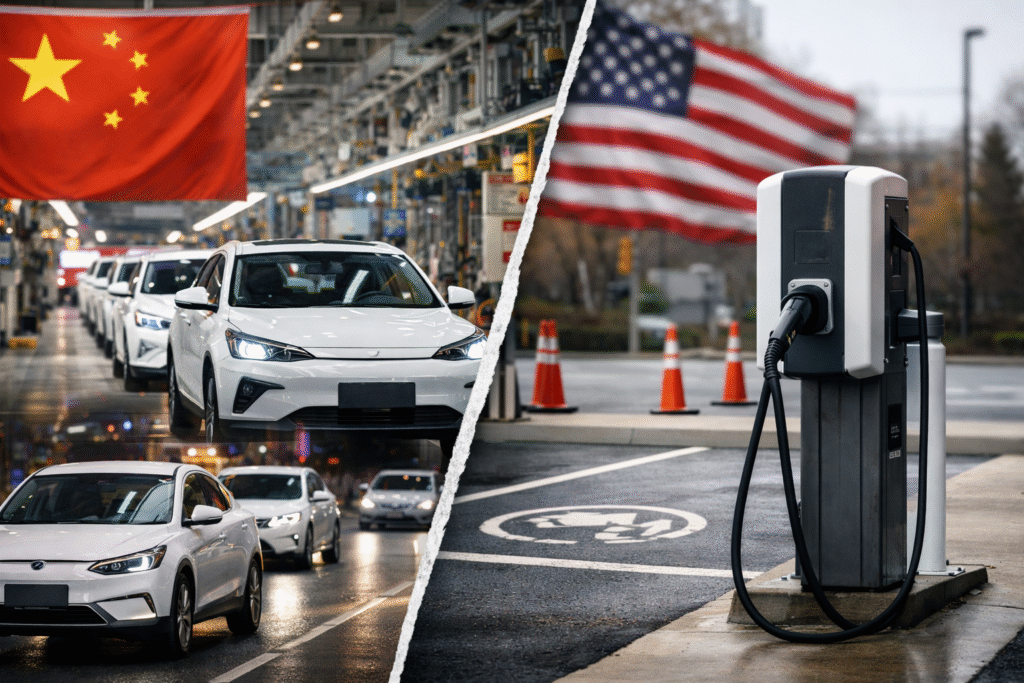
China is scaling electric vehicles at record speed, targeting 10 million EVs a year. Meanwhile, the United States is struggling to expand charging infrastructure, with legal battles slowing the transition to electric transport.
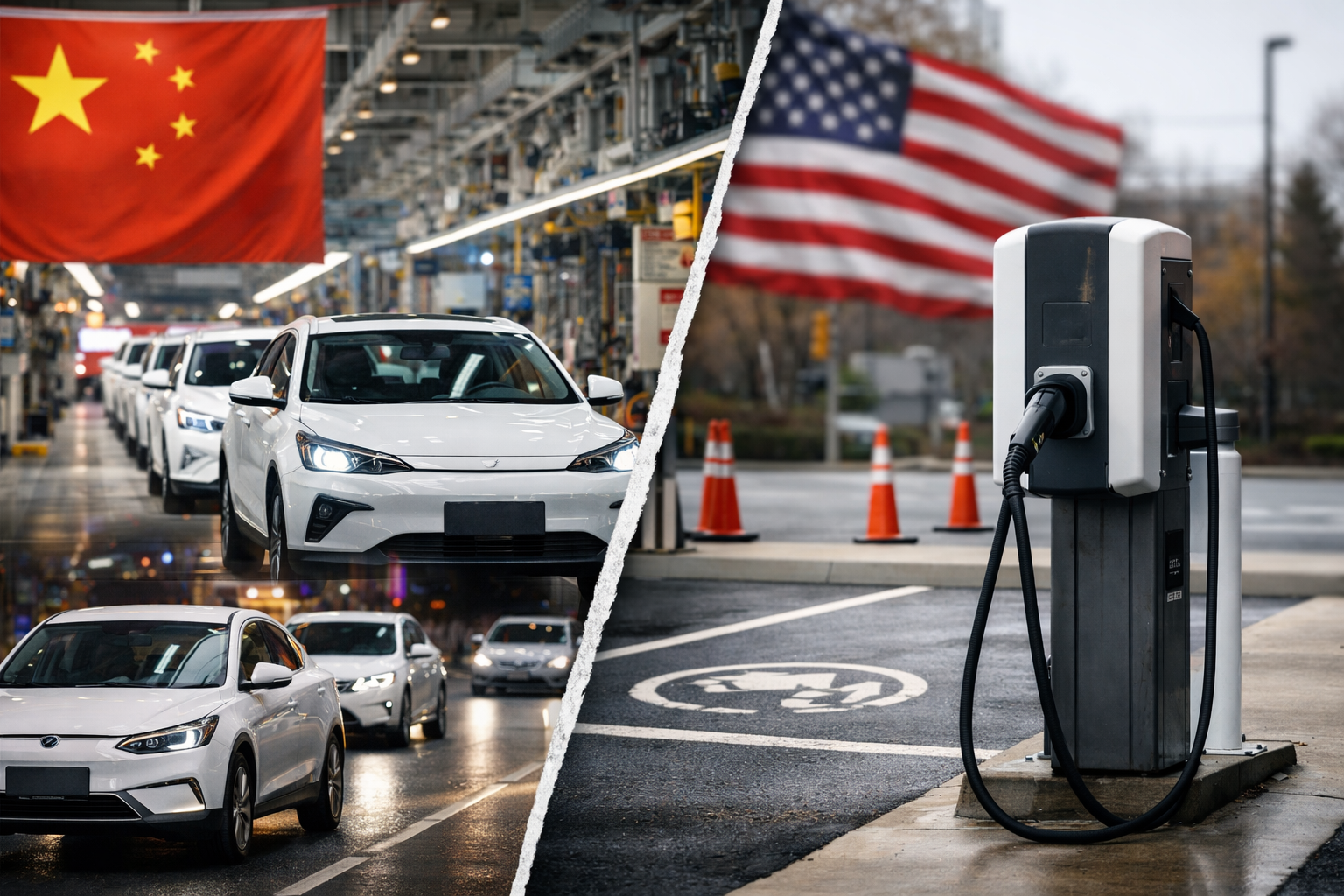
China is racing ahead in electric vehicles. The United States is tied up in court.
That contrast says a lot about where the global EV transition is heading.
In 2025, China is expected to produce 10 million electric vehicles in a single year, cementing its position as the world’s dominant EV market. At the same time, 16 U.S. states are suing the federal government over frozen funding meant to build EV charging stations, money that was supposed to support America’s own transition away from petrol cars.
One country is scaling fast. The other is arguing over infrastructure.
China’s EV push didn’t happen by accident. Years of coordinated industrial policy, subsidies, and supply-chain planning have paid off. According to reports from the South China Morning Post, China will account for more than 60% of global EV sales in 2025.
Companies like BYD and SAIC are leading the charge, supported by a domestic ecosystem that spans batteries, power electronics, semiconductors, and raw material processing. From lithium refining to battery manufacturing, China controls much of the value chain that makes electric vehicles possible.
The result is speed and scale that no other country currently matches.
But there’s a catch.
Some analysts are starting to worry that China’s success could become a problem. If production keeps rising faster than demand, the market could face oversupply. That would likely trigger price wars, squeeze margins, and push smaller manufacturers out of business.
Chinese regulators are aware of the risk. The country’s Ministry of Industry and Information Technology has reaffirmed the 10-million-EV target but warned that production must be balanced with real demand, both at home and overseas.
Still, from Beijing’s perspective, slowing down isn’t really an option. EVs are central to China’s climate goals, industrial competitiveness, and long-term economic strategy.
Across the Pacific, the picture looks very different.
Sixteen U.S. states including California, New York, and Illinois have taken the federal government to court after billions of dollars in EV charging funds were frozen. The money, allocated under the Bipartisan Infrastructure Act, was meant to build a nationwide fast-charging network.
Without chargers, EV adoption slows. And without adoption, emissions targets become much harder to meet.
The states argue that freezing the funds violates federal law and undermines climate commitments. Federal officials cite budget reviews and national security concerns. Critics call those explanations political cover.
Either way, the result is delay, and delay is costly in a global race.
Electric vehicles don’t succeed or fail on car sales alone. They succeed on infrastructure confidence.
If drivers don’t trust that chargers will be available on highways, in regional towns, or in apartment complexes, they hesitate to switch. That hesitation compounds, slowing the entire transition.
This is where China has a strategic edge. Its EV rollout has been matched with rapid deployment of charging infrastructure, grid upgrades, and battery supply chains. The U.S., by contrast, risks falling behind not because of technology, but because of governance and coordination failures.
The longer the U.S. delays, the more China strengthens its lead, not just in vehicles, but in batteries, minerals, and manufacturing know-how. That has long-term implications for energy security, industrial competitiveness, and jobs.
The EV transition isn’t just about cleaner transport. It’s about who controls the technologies that will power the next industrial era.
Right now, China is building. America is debating.
And in a global race, hesitation can be just as decisive as innovation.