Physical Address
Sydney, Australia 2564
Physical Address
Sydney, Australia 2564
Agrivoltaics is growing fast, but policy, not technology, is deciding where it succeeds. From Europe’s gold-standard incentives to India’s farmer-first subsidies and Australia’s cautious pilots, governments are shaping who gets to benefit and who gets left behind. Here’s how regulations, permits, and programs are determining the real future of solar-powered farming.
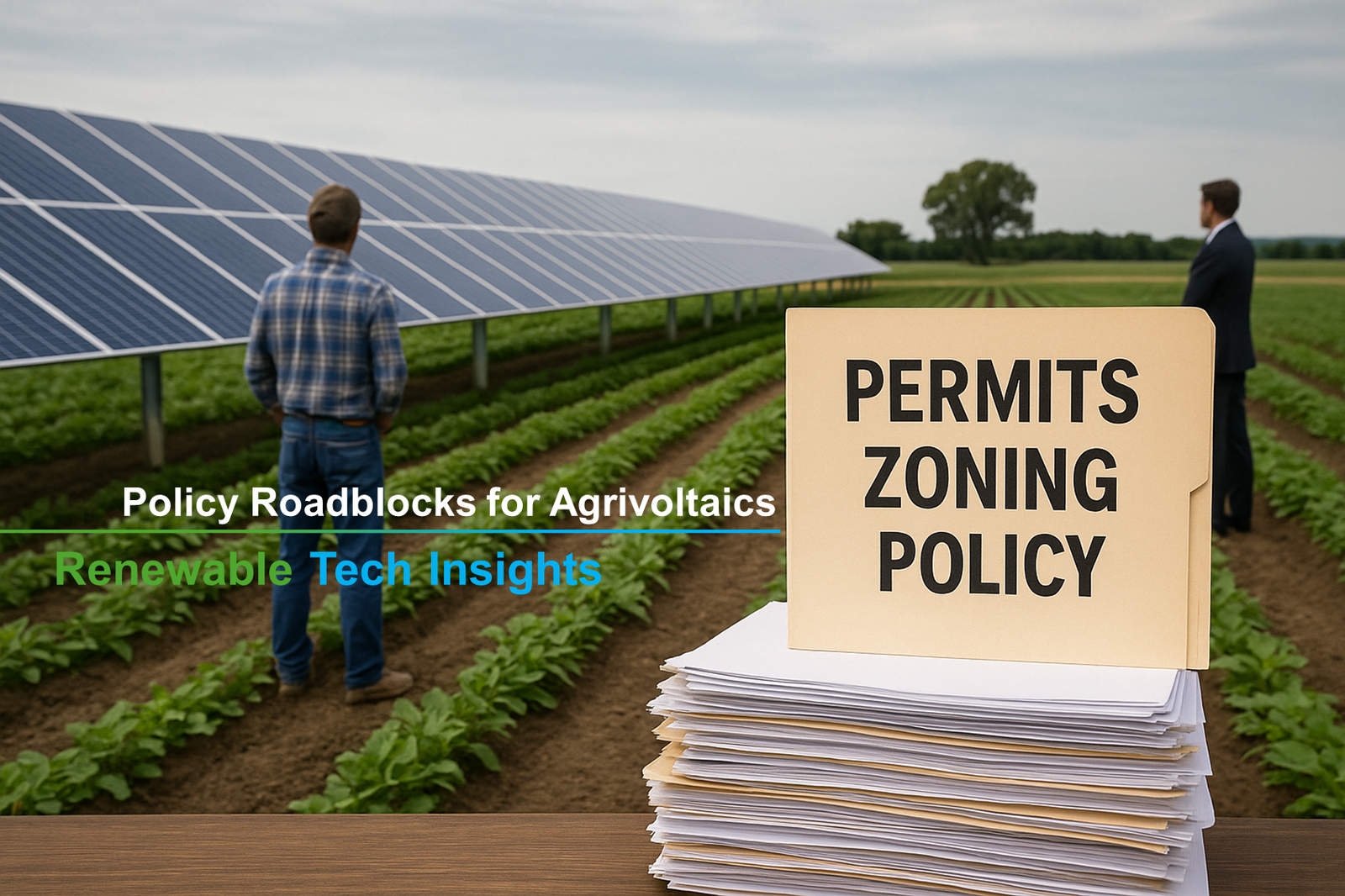
Here’s something that might surprise you: The biggest barrier to widespread agrivoltaics is not the technology or even the cost. It’s paperwork. Specifically, it’s the maze of regulations, permits, and policies that determine whether a farmer can actually install solar panels over their crops. Sounds frustrating, right? Because you could design the most brilliant agrivoltaics system in the world, but if the local zoning board does not understand what you’re trying to do, or if there’s no policy framework to support dual-use land, your idea stays stuck on paper. This is where government policy becomes the invisible hand that either speeds up or stranglehold innovation.
Agrivoltaics sits at the intersection of two heavily regulated industries-energy and agriculture. It’s like trying to build a house right on the property line between two different cities, each with their own rules and approval processes. In traditional farming, you deal with agricultural departments and local zoning boards. In solar energy, you navigate utility regulations and energy market rules. Agrivoltaics? You deal with all of them, often at the same time, with each agency having different definitions of what counts as “agricultural use” or “energy generation.”
According to the International Renewable Energy Agency (IRENA) report, this regulatory complexity adds an average of 6-18 months to project timelines and can increase costs by 15-25%. This isn’t just annoying bureaucracy-it’s a real barrier preventing promising technologies from reaching farmers who need them.
Europe, particularly France and Germany, has become the testing ground for agrivoltaic-friendly policies. The European Union’s Common Agricultural Policy has been restructured to support farmers adopting dual-use practices.
France has created what many consider the gold standard. According to the French Ministry of Agriculture, French regulations not only allow dual-use systems but actively encourage them through feed-in tariffs of €0.10-0.15 per kWh, significantly higher than conventional solar farms.
The French approach includes clear definitions (maintaining at least 70% of original agricultural productivity), streamlined permitting, and specific subsidies for farmers making the transition. The result? According to the French Renewable Energy Association, French farmers installed over 500 MW of agrivoltaic capacity in 2023 alone.
Germany’s Renewable Energy Sources Act (EEG) provides premium payments recognizing dual benefits. According to the German Federal Ministry for Economic Affairs and Energy, agrivoltaic projects receive feed-in tariffs 10-15% higher than traditional solar installations.
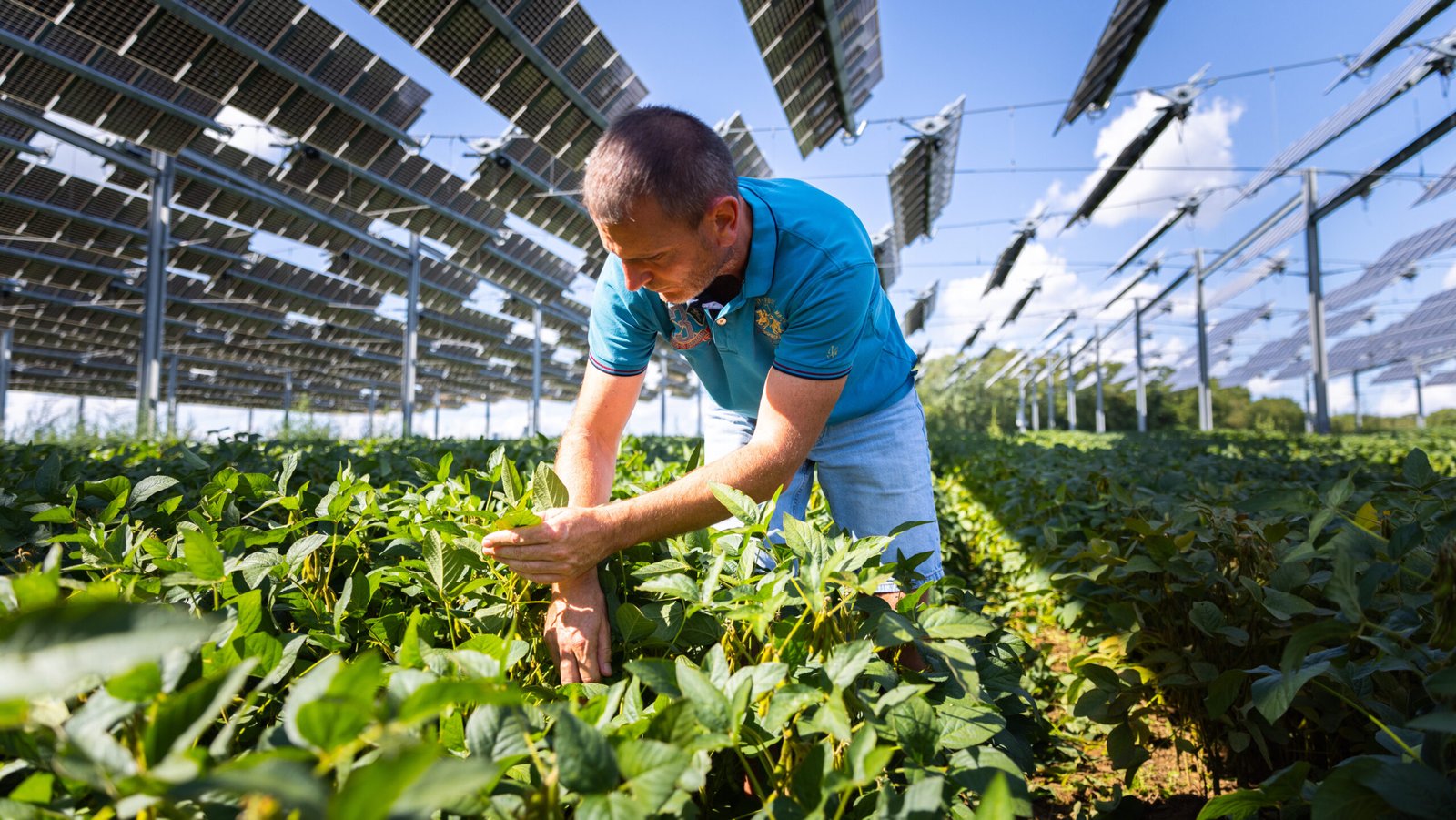
The United States presents a fascinating case of policy diversity. With 50 states making their own rules, America has become an unintentional laboratory for different regulatory approaches.
Massachusetts leads with its Solar Massachusetts Renewable Target (SMART) program providing specific incentives for dual-use installations. According to the Massachusetts Department of Energy Resources, agrivoltaic projects receive adder payments of $0.06 per kWh on top of base rates.
California focuses on research. The California Energy Commission allocated $20 million for agrivoltaic research, while the state’s Self-Generation Incentive Program provides rebates for agricultural solar installations, according to the California Public Utilities Commission.
At the federal level, the USDA’s Rural Energy for America Program (REAP) provides grants covering up to 25% of project costs. The Department of Energy’s Solar Energy Technologies Office launched the $8 million Agrivoltaics Research Program for technology development.
But here’s the problem: A farmer in Massachusetts might receive substantial incentives totaling $0.15 per kWh, while a farmer in Alabama faces barriers making the same project unfeasible. This inconsistency creates market distortions and limits potential.
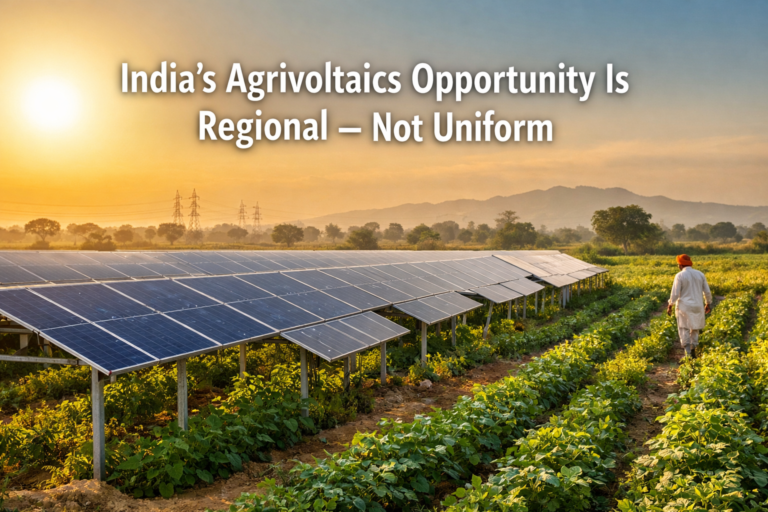
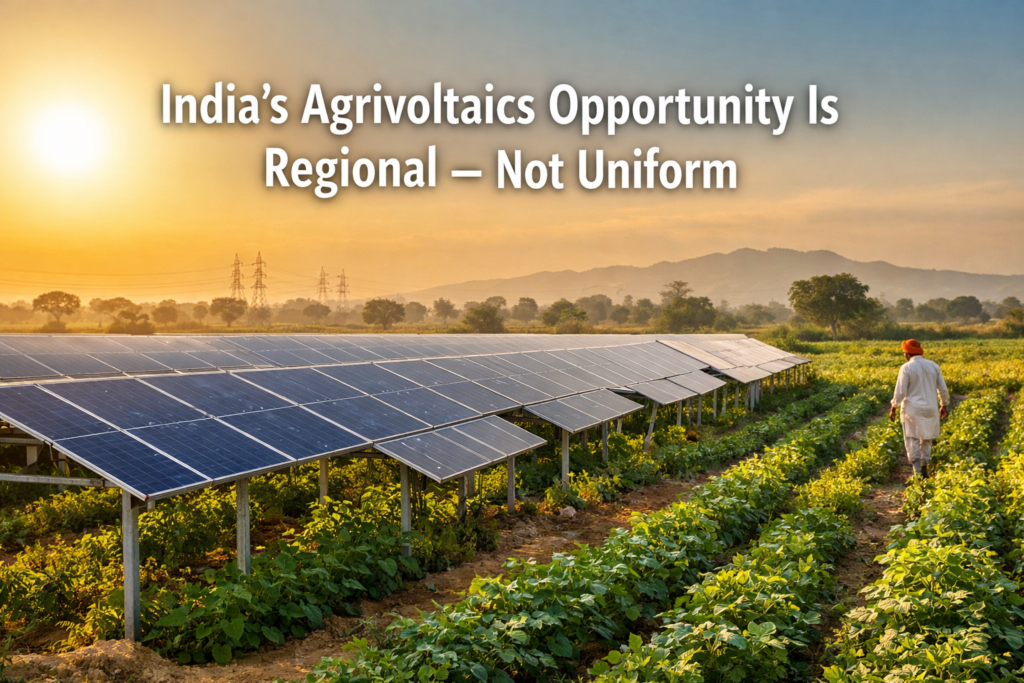
India’s approach is both bold and comprehensive. The PM-KUSUM scheme provides 40-60% capital subsidies for farmers installing solar systems, including agrivoltaic configurations.
According to the Indian Ministry of New and Renewable Energy, the program aims to add 25,750 MW of solar capacity by 2026, with an estimated $24 billion investment. What makes India’s approach unique is its focus on farmer empowerment, it’s not just about installing panels, it’s about creating a new economic model for rural areas.
Farmers can sell excess electricity back to the grid at rates typically ranging from ₹2.5-4.5 per kWh ($0.03-0.054 per kWh). This essentially turns fields into power plants that also produce food. According to Solar Power Portal India, over 50,000 farmers have benefited, with many reporting 20-30% increases in annual income from electricity sales alone.
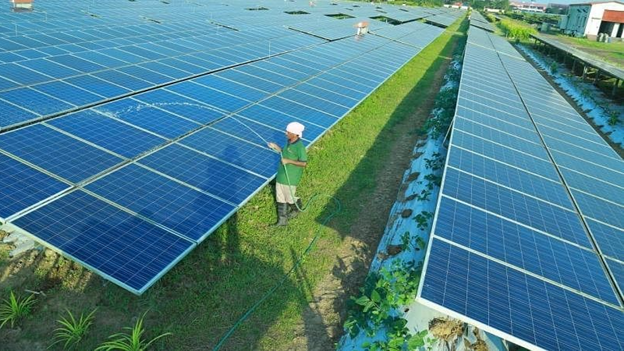
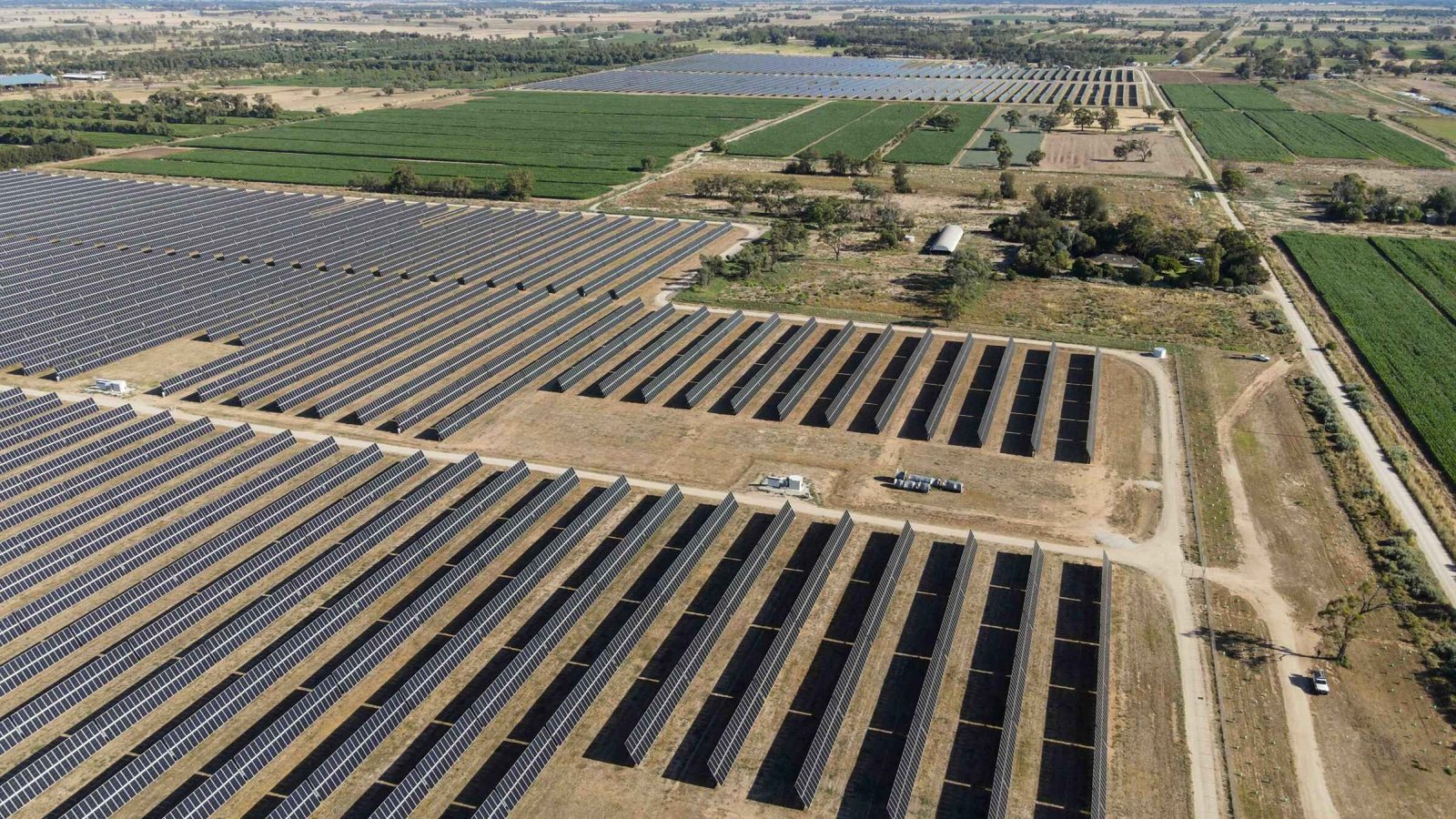
Australia’s vast agricultural lands and abundant sunshine make it ideal for agrivoltaics, but the country is taking a careful approach. The Australian Renewable Energy Agency (ARENA) committed $9.3 million to fund pilot projects to understand what works before committing to large-scale policy changes.
According to ARENA’s 2023 report, this “test first, regulate later” approach has trade-offs. It ensures policies are based on real-world data rather than theory, but the lack of clear frameworks can discourage investment and slow adoption.
But the lack of a clear framework carries consequences. Without national definitions of agrivoltaics, without rules for dual-use land classification, and without targeted incentives for farmers, developers face regulatory ambiguity. Farmers must navigate conventional zoning rules that were never designed for solar-plus-agriculture systems. As a result, most Australian projects remain at the pilot or research stage, while commercial deployment is still minimal.
Some state programs such as Victoria’s Solar Homes rebates or Queensland’s rural economic development grants support farm solar in general, but none address agrivoltaics specifically. They encourage energy adoption, not the integration of energy and agriculture.
Compared with global frontrunners, Australia is still in the early stages. Europe already operates with clear agrivoltaic definitions, productivity standards, and national incentives that accelerate deployment. The United States, despite its fragmented system, has several states with dedicated dual-use rules, permitting pathways, and financial adders that directly reward agrivoltaic installations. India’s approach is even more assertive, combining major capital subsidies with guaranteed tariffs to create a new income stream for farmers. Against these models, Australia’s pilot-first strategy feels conservative, strong on evidence, but slow to deliver the policy certainty required for widespread adoption.
Based on global experiences, several key elements seem essential for successful agrivoltaic deployment:
Clear definitions and standards: Policies need to clearly define what constitutes agrivoltaics versus traditional solar farms. According to the International Energy Agency (IEA), countries with clear regulatory definitions see 40% faster project development times. Streamlined permitting: The best policies create one-stop shops for approvals. Germany’s approach, where farmers obtain all permits through a single online portal, has reduced approval times from 18 months to 6 months on average.
Financial incentives that recognize multiple benefits: Effective policies acknowledge that agrivoltaics provides energy generation, crop protection, water conservation, and land use efficiency. According to BloombergNEF analysis, countries offering tiered incentives based on agricultural productivity see 60% higher adoption rates. Grid access and fair pricing: Farmers need reliable grid access and fair compensation for electricity they generate. The World Bank reports that countries with standardized grid connection procedures see 3x more agrivoltaic installations than those with complex requirements.
Creating effective agrivoltaic policies isn’t easy. Policymakers must balance competing interests: utility companies worried about grid stability, traditional farmers concerned about land use changes, environmental groups with varying priorities, and energy developers seeking profits.
According to the Organisation for Economic Co-operation and Development (OECD), successful agrivoltaic policies require coordination between at least six different government agencies on average. This complexity often leads to policy fragmentation and inconsistent implementation.
There’s also the challenge of unintended consequences. Policies designed to encourage agrivoltaics might inadvertently encourage land speculation or create market distortions. The European Environment Agency warns that poorly designed subsidies can lead to “greenwashing,” where projects claim agricultural benefits without delivering them.
Here’s something often overlooked: The best agrivoltaic policies are being shaped by farmers themselves. When farmers understand the technology and its benefits, they become powerful advocates for supportive policies.
According to the American Farm Bureau Federation, farmer-led advocacy has been instrumental in passing agrivoltaic-friendly legislation in 12 states since 2020. They speak at town halls, lobby legislators, and share experiences with neighbors. This grassroots advocacy is crucial because it provides policymakers with real-world examples. It’s one thing for a consultant to present theoretical benefits; it’s another for a local farmer to explain how solar panels helped them survive a drought while generating additional income.
The most exciting developments are happening at the intersection of climate change, energy security, and food production. According to the United Nations Framework Convention on Climate Change, agrivoltaics could contribute up to 9% of global renewable energy targets while maintaining food production.
Some countries are exploring carbon credit programs that pay farmers for environmental benefits. The voluntary carbon market already prices agricultural carbon credits at $10-50 per ton of CO2 equivalent, according to Ecosystem Marketplace.
Others are investigating how agrivoltaics can contribute to grid stability. The International Renewable Energy Agency projects that distributed agrivoltaic systems could provide up to 20% of grid stabilization services by 2030.
The story of agrivoltaics is really about how policy can either accelerate or constrain innovation. According to the International Institute for Sustainable Development, countries with comprehensive agrivoltaic policies see 5x faster technology adoption than those without supportive frameworks.
For farmers and developers, understanding the policy landscape is as important as understanding the technology. The most successful projects are those that align with existing frameworks while helping shape future development.
As we look forward, the countries that develop the most effective agrivoltaic policies will likely become leaders in this emerging field. They will attract investment, develop expertise, and create economic opportunities that benefit both farmers and society.
The question for policymakers is straightforward: Will you create the framework that enables innovation, or will you be the bottleneck that prevents it? The future of agriculture and energy may depend on the answer.


Join thousands of readers exploring the next wave of clean energy innovation.