Physical Address
Sydney, Australia 2564
Physical Address
Sydney, Australia 2564
Agrivoltaics shares land between crops and solar. With a few sensors, simple software and basic tilt control, timing improves, water use drops and hot days are easier to manage. This piece explains what “smart” really looks like on a farm without hype and here it does and doesn’t fit.
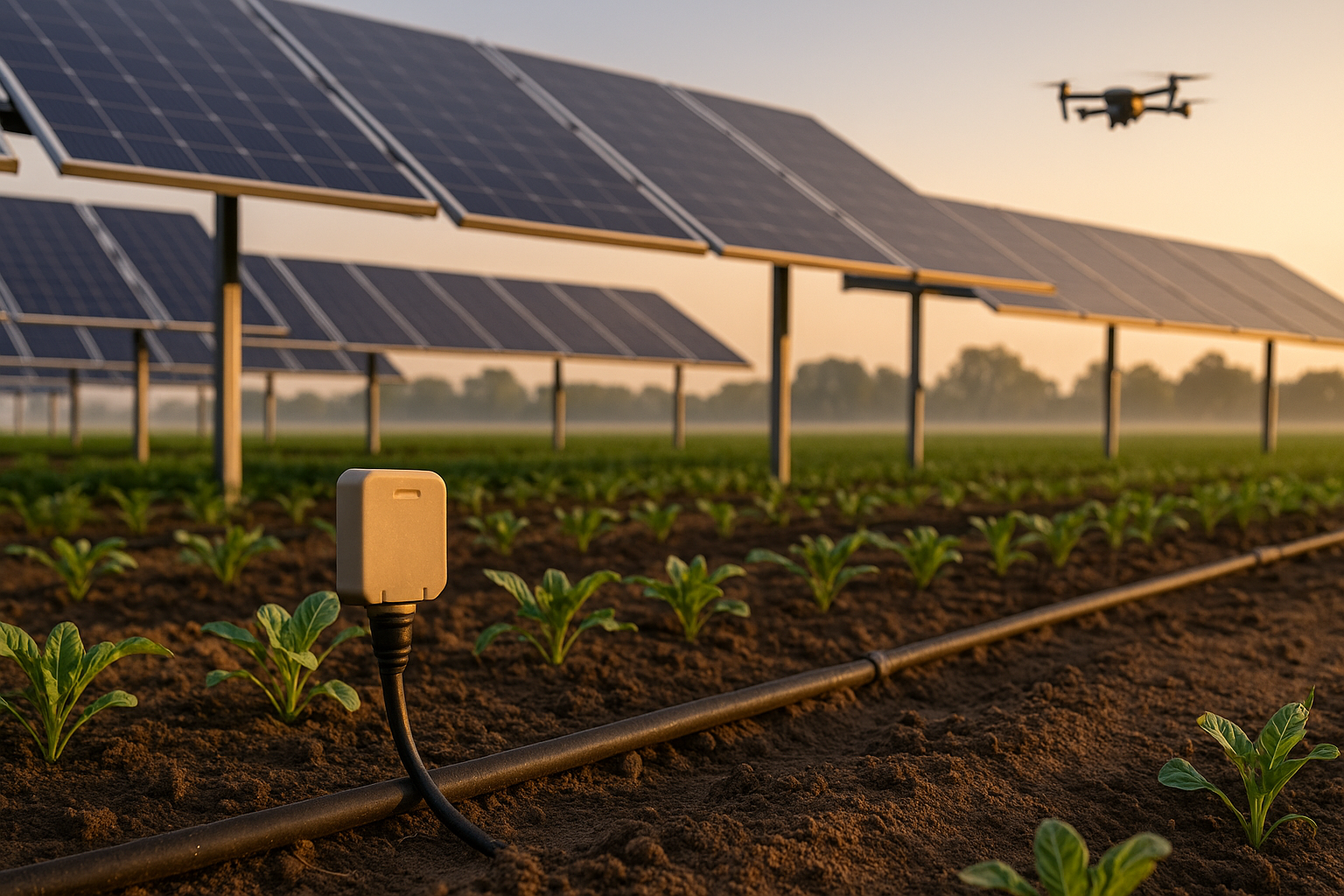
Agrivoltaics puts farming and solar on the same land. The idea is simple; the reality is dynamic. Shade shifts through the day, water needs change across a block, and crop comfort moves with wind and heat. Digital tools such as sensors, basic connectivity, and light-touch software turn that moving target into timely, practical decisions.
Dual-use fields don’t behave like uniform paddocks. A row under morning shade will hold moisture longer than a sun-flooded lane a few metres away. If irrigation follows a fixed calendar, one area over-soaks while another dries out. The same goes for heat. Crops that handle a normal afternoon can struggle on a hot, still day, then settle again when the breeze returns. Good outcomes depend less on doing more, and more on doing the right small action at the right moment.
This is where simple data makes a difference. A couple of moisture probes at two depths show how roots are actually drinking. A canopy or leaf temperature reading shows whether a crop is comfortable or stressed. An evapotranspiration forecast gives a sense of what the next 24 hours will pull from the soil. Put those three together and the agrivoltaic farm shifts from guessing to guidance: delay water here, pulse there, and save the long run for tomorrow morning when it will stick.
Dynamic panel control follows the same logic. Fixed arrays work well and keep costs predictable, but some crops benefit from an hour of extra shade during a heat spike. A small tilt in the toughest part of the afternoon can trim leaf temperature and protect quality without turning the day into a manual juggling act. As conditions ease, the array returns to an energy-first position. It isn’t crops versus power. It’s timing for both.
A practical setup is modest. Two or three representative rows carry soil moisture probes and a light sensor. A gateway moves data off the paddock over LoRaWAN or cellular, and a simple app turns readings into prompts you can act on. You are not building a control room; you are giving yourself earlier signals so you spend less time walking the whole site “just in case.”
Irrigation is the first place most growers notice change. Under panels, evaporation is lower, but not evenly lower. Seeing moisture at depth helps you swap long, field-wide soaks for shorter, targeted pulses. Muddy patches under drip edges become rarer. Pumps work in calmer windows, often aligned with your own solar output or cheaper tariffs. Over a season, the savings show up as steadier soil conditions, reduced water use, and fewer messy delays after irrigation.
Aerial checks add another quiet gain. A short multispectral drone flight each week reveals stress a few days before it shows to the eye. On agrivoltaic layouts, where micro-climates are real, that early signal is useful. You can treat a hot corner without touching the rest of the block, fix a clogged emitter before a row sags, or hold a spray if the canopy is still damp. The inspection becomes shorter and more focused, and blanket treatments become rare.
Daily operations should feel calmer, not busier. That means planning the simple things well. Cables and junction boxes live away from tyre paths. Valves sit where people actually work on harvest days. Machinery clearance is drawn before the first post goes in. If you graze sheep, fencing, water points and service access are planned together. None of this is fancy. It’s the difference between a site that runs and a site that fights you.
The best entry point is to instrument the blocks that tell the story: a hotter row, a cooler row and a typical row. Add one gateway with local logging so storms don’t erase data. Use an interface you will open with your morning coffee. Begin with quarterly drone flights and increase only if they keep saving time or inputs. Add dynamic tilt where crop sensitivity and access justify the extra steel. Let results, not catalogues, drive expansion.
There are limits worth noting. Agrivoltaics does not suit every crop or region. Broadacre cereals generally dislike shade unless structures go tall and wide, and extra steel raises costs quickly. Some sites have weak grid access that slows interconnection. Wind or snow loads can narrow design options. Be cautious if a project only works because of one grant or one soft loan. The most robust builds serve on-farm loads first, phase capacity over time, and rely on several modest benefits rather than a single headline number.
On good agrivoltaic sites, the pattern is steady rather than spectacular. Quality holds through hot spells. Full-field irrigation is rarer because you only water what needs it. Mowing drops when sheep work the alleys. Busy weeks run with fewer last-minute changes. Energy output may dip slightly if you prioritise crop comfort in the hottest hours, but cooler modules and smoother operation often balance the curve. Over a season, healthy crops plus reliable power tend to beat chasing a single metric.
The people side matters as much as the hardware. Digital tools do not replace farm experience; they make it go further. One person often becomes the systems lead who checks the dashboard, tweaks irrigation windows and sets tilt rules. Everyone else benefits from fewer surprises and clearer plans. The habit that sticks is simple: open the app once a day, make one decision, move on.
In the end, agrivoltaics works best when it serves the farm first and the power system second. AI and IoT don’t add magic; they improve timing. With a few sensors, straightforward software, basic tilt control and thoughtful layout, you can water less, protect crops on hard days, and keep land in production while it generates power. Keep the system lean, build only what you will use, and grow by proof. The payoff is fewer guesses, steadier weeks and a paddock that still looks and works like a farm, now with a second line of income.


Leave a Reply