Physical Address
304 North Cardinal St.
Dorchester Center, MA 02124
Physical Address
304 North Cardinal St.
Dorchester Center, MA 02124

All Energy Australia 2025 marked a turning point for the nation’s energy transition. With storage, hydrogen, and AI at the forefront, the focus has shifted from ambition to execution proving that Australia’s clean energy revolution is well underway.
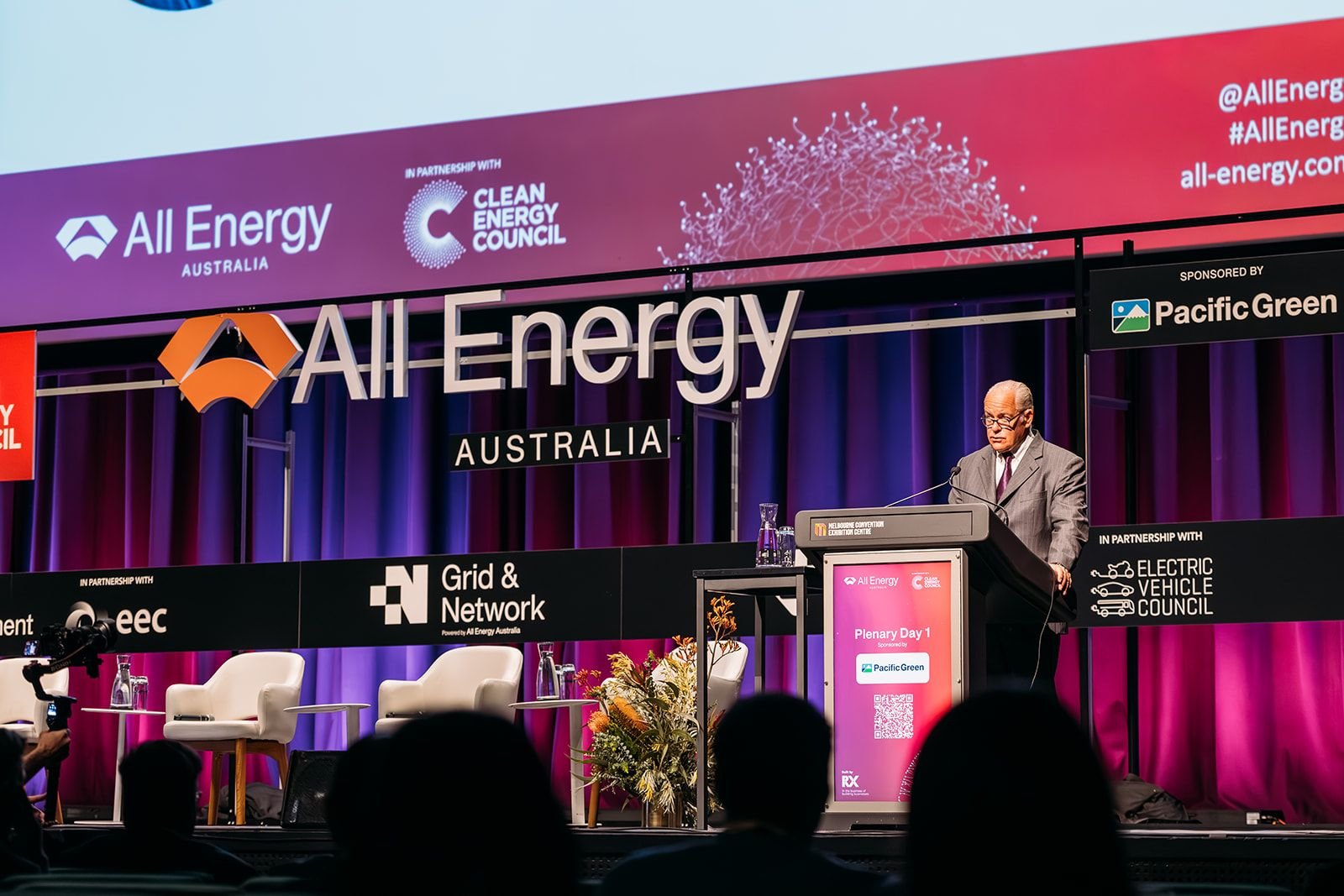
For years, Australia’s clean energy story has been told in the future tense. A nation of vast potential, yet slowed by policy debates and market uncertainty.
That narrative changed at All Energy Australia 2025, held in Melbourne on October 29–30.
Organised by RX Global in partnership with the Clean Energy Council (CEC), this year’s All Energy Australia marked a defining shift in tone. With 15,000 attendees, 400 global suppliers, and 500 speakers, it wasn’t just the Southern Hemisphere’s largest renewable energy gathering. Rather it was a showcase of how Australia’s clean-energy ambitions are materialising through projects, policies, and partnerships. The overarching message? The transition has moved from vision to execution. Conversations once dominated by megawatt milestones now centred on integration, storage, hydrogen, and workforce capacity, the infrastructure of a maturing clean-energy economy.
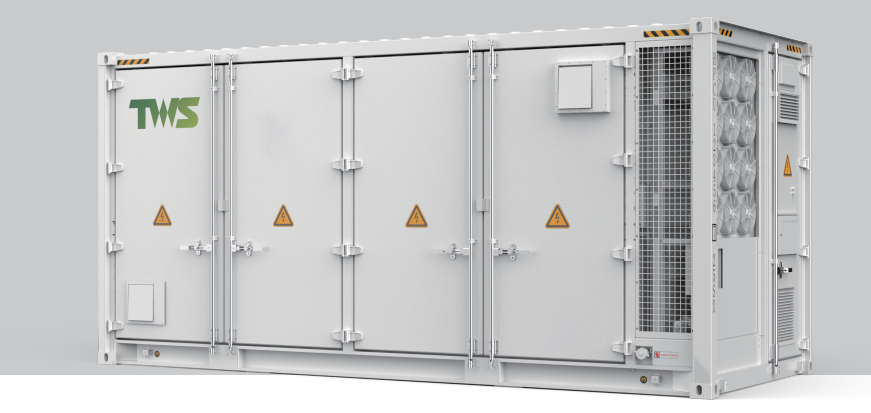
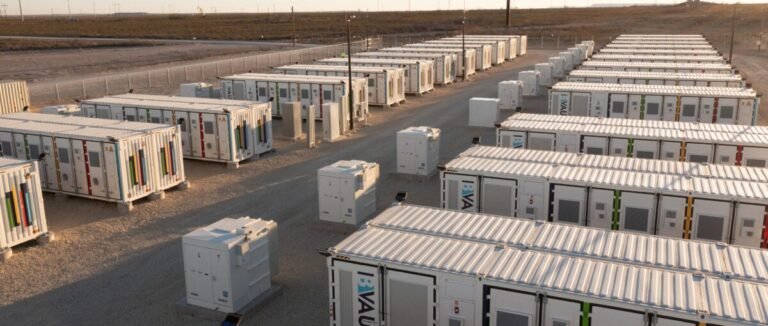
If Energy Taiwan 2025 was a story about innovation ecosystems, All Energy Australia 2025 was about application at scale. The spotlight fell squarely on energy storage not as a side technology, but as the backbone of grid stability and industrial continuity. Companies like TWS Technology demonstrated how storage is now solving real operational problems. At their booth, visitors saw solutions tailored for mining, agriculture, and manufacturing sectors that define Australia’s economic base. For mining operations in remote areas, TWS’s “One Core, Multi-Adapt” systems offered uninterrupted, high-load power. Farmers, facing rising irrigation costs, were drawn to a new PV-Storage-Irrigation model that synchronises solar input with irrigation cycles, reducing peak demand charges. Meanwhile, for the commercial and industrial sectors, TWS showcased its Max-Pro and PowerCore liquid-cooled systems. Built for 50°C environments, these modular units deliver up to 5 MWh capacity, maintain 95% discharge efficiency, and extend battery life by 20% through advanced thermal management. This is a proof that storage has evolved from a lab-tested solution to a business-critical tool. In a country where energy price volatility can make or break profitability, storage is fast becoming the strategic edge.
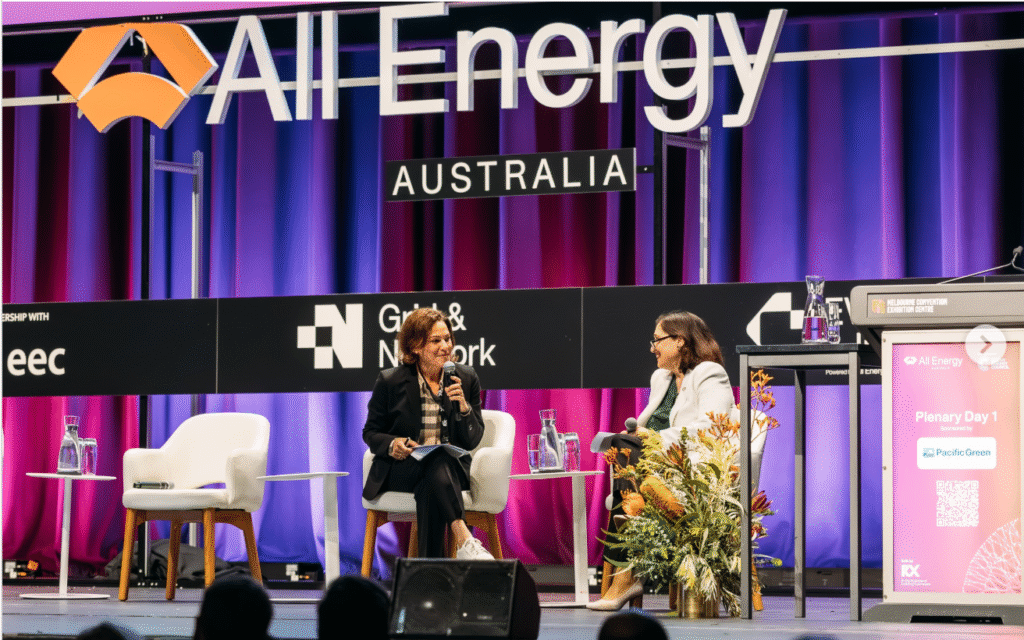
Government and industry leaders echoed the same sentiment: the sector’s challenge is no longer “if,” but “how fast.” Victoria’s Minister for Climate Action, Energy and Resources, Lily D’Ambrosio, and CEC’s incoming CEO, Jackie Trad, while speaking at All Energy Australia 2025, emphasized that renewable growth must be matched by robust grid infrastructure, skilled labour, and supportive regulation.
Trad’s sessions on “Cheaper Home Batteries” and “The Role of Energy Storage and the Grid” highlighted the growing intersection between household economics and system-level planning. The message was clear. Distributed storage and grid-scale capacity must grow together. Panels and masterclasses addressed grid bottlenecks, planning delays, and transmission reform, the invisible hurdles slowing the energy boom. As one delegate summarised, “Returns will come from solving integration problems, not just adding megawatts.” This focus on policy alignment and system design signals a phase shift: Australia’s energy transition is no longer about ambition; it’s about architecture.
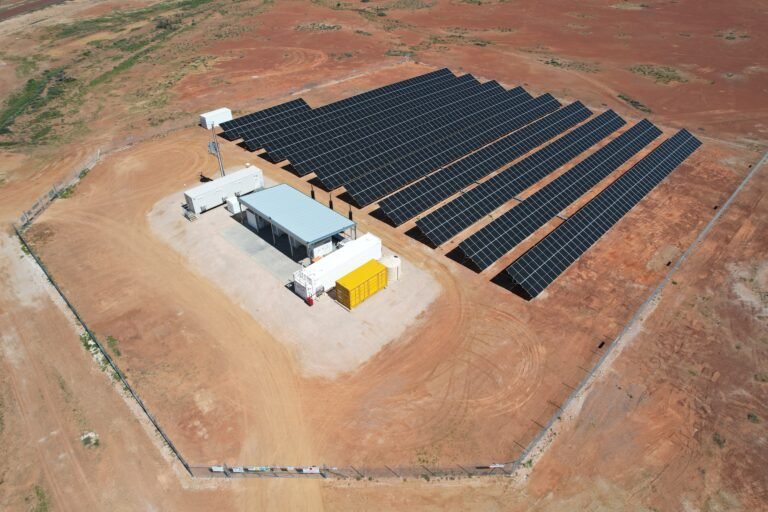
Australia’s clean-energy roadmap is shaped by its geography – extreme heat, vast distances, and isolated loads.
These realities are pushing engineers and manufacturers to build for resilience and adaptability, not just efficiency. That’s where TWS’s liquid-cooled storage designs and modular microgrids shine. They’re built for conditions where summer temperatures exceed 45°C and power outages can cost mining or agricultural operations thousands per hour.
The country’s evolving landscape of C&I storage, off-grid hybrid systems, and AI-based predictive control proves that the next energy revolution will be engineered, not legislated into existence.
The 2025 edition of All Energy Australia wasn’t just about established players.
The Energy Lab Startup Showcase featured early-stage ventures working on AI-based forecasting, hydrogen generation, and flexible demand management. This is a evidence of a clean-tech ecosystem diversifying beyond generation into intelligence. These startups embody the next frontier: turning data into resilience.
Their software-driven tools promise to optimise dispatch, forecast renewable variability, and enable real-time balancing, the digital layer that will make 100% renewable systems viable. Hydrogen, too, continued to mature from buzzword to business model. Pilots in heavy transport and ammonia synthesis suggest that hydrogen will soon complement storage as a medium for long-duration energy security. The market outlook remains robust. Australia attracted AUD $12.7 billion in clean-energy investment in 2024, driven by mechanisms like the Capacity Investment Scheme and state programs such as Victoria’s revived State Electricity Commission (SEC). That momentum carried into All-Energy 2025, where investors and developers discussed not only gigawatt-scale projects but also new contract models for flexibility services and virtual power plant participation. The tone was pragmatic, not speculative, which is a sign that renewable infrastructure has entered its institutional phase.
From Melbourne to Taipei, the themes are converging.
At Energy Taiwan 2025, the focus was on AI-powered manufacturing resilience and energy innovation; in All Energy Australia 2025, it was on integration and scale.
Together, these events paint a picture of an Asia-Pacific region defining its own energy model. One built on innovation, localisation, and resilience under extreme conditions.
Australia’s story is no longer about catching up. It’s about leading by pragmatism, where every new storage system, policy, and partnership moves the needle from targets to tangible progress.
As the energy transition enters its execution phase, could Australia’s model of applied innovation become the benchmark for turning net-zero promises into measurable progress?

Leave a Reply